Commercial Property Liability: Why Strip Malls Can’t Ignore Uneven Concrete
By: Josh Fulfer
Estimated Read Time: 6 Minutes
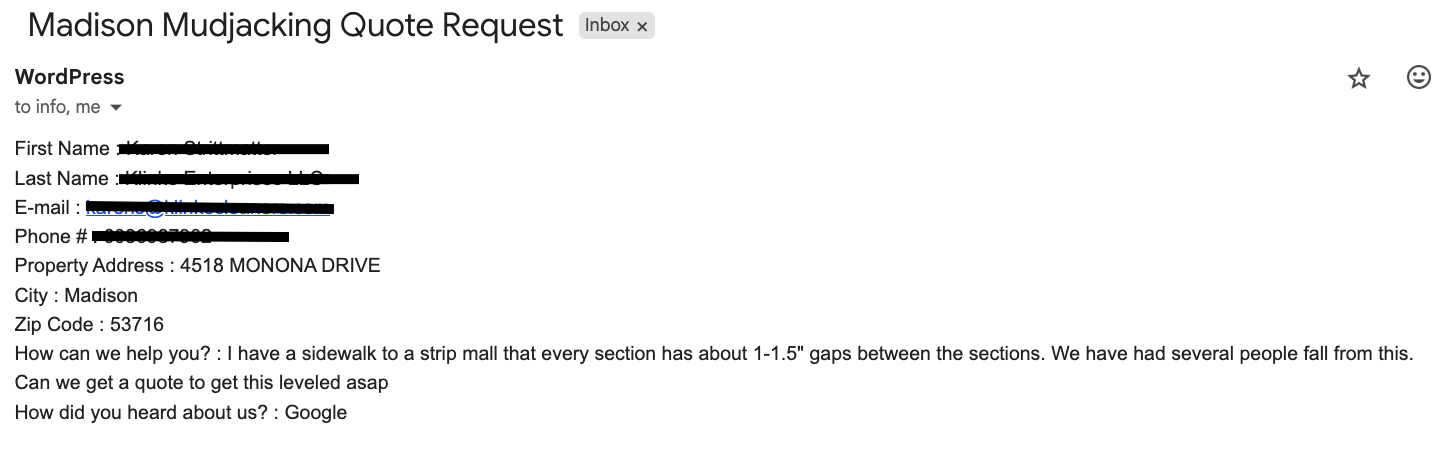
 We just got a new lead we wanted to share with you. A strip mall in Madison reached out because their sidewalk has sections with 1–1.5” gaps between slabs. Multiple people have already fallen. They need it fixed ASAP—not just because it looks bad, but because the liability risk is massive.
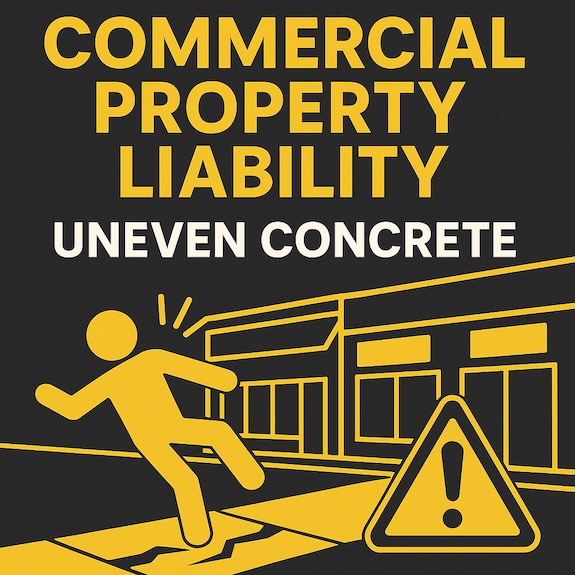
For commercial property owners, liability is the hidden cost of ignoring uneven concrete. Sidewalks, entryways, ramps, and curbs aren’t just aesthetics—they’re legal hazards if they’re not maintained. If someone trips and gets injured, the owner (and sometimes the tenant) can be held responsible. That means lawsuits, medical bills, lost tenants, higher insurance premiums, and damage to reputation.
The Real Risk of Uneven Concrete for Property Owners
In the commercial world, risk management is everything. Uneven slabs may look like a minor nuisance, but here’s what they really are: a lawsuit waiting to happen.
- Trip and fall injuries: Sidewalks and walkways with 1”+ height differences are considered dangerous and non-compliant with ADA guidelines.
- Liability lawsuits: If someone is injured, property owners can be sued for medical costs, lost wages, and pain and suffering.
- Insurance hikes: Even if insurance covers the claim, future premiums skyrocket.
- Tenant issues: Businesses renting space don’t want the risk of customers getting hurt walking in.
- Public reputation: Nobody wants to be “the mall where people trip on the sidewalk.”
Ignoring the problem is never cheaper. One injury claim can cost far more than repairing dozens of slabs.
Strip malls and retail centers get heavy daily foot traffic. Unlike a residential driveway where the risk is lower, commercial sidewalks see kids, elderly patrons, deliveries, and people in a hurry. Add in carts, strollers, or rainy conditions and it’s a recipe for accidents.
Property owners should know:
- ADA guidelines generally consider 1/4” to 1/2” vertical differences as trip hazards.
- 1”+ displacement is an obvious violation and creates huge liability exposure.
- Retail tenants often push back on renewing leases if common areas are unsafe.
This is why we weren’t surprised when the Madison property manager said: “We’ve had several people fall already.” That’s the point when liability is no longer a maybe—it’s a when.
Concrete Lifting: The Fastest Way to Reduce Liability
Full replacement is expensive, disruptive, and slow. Concrete lifting (polyjacking or mudjacking) is the fastest, most cost-effective way to remove the hazard and reduce liability.
- Same-day use: Most walkways can be reopened within hours, not days or weeks.
- Cost-effective: Lifting usually costs a fraction of replacement.
- Minimal disruption: No need to shut down businesses or block entryways for long.
- Durable: With proper injection, slabs stay supported and safe.
Property managers want two things: happy tenants and no lawsuits. Lifting concrete delivers both.
For related strategies, see How to Win Big Commercial Lifting Jobs Without Getting Burned.
How to Close Commercial Liability Leads
TRIP & FALL LIABILITY IS A HUGE SELLING POINT
When you get a lead like this, timing and confidence matter. Here’s how to approach it:
- Respond quickly: They’re panicking about risk. Be the fast, calm solution.
- Use liability language: Talk about reducing exposure, protecting tenants, and ADA compliance.
- Show proof: Photos, videos, and case studies of similar jobs build confidence.
- Offer a warranty: Put it in writing. It eases their fear of “what if it settles again?”
- Give scheduling options: Nights or off-hours keep tenants happy.
The goal isn’t just to sell a lift—it’s to become their go-to problem solver for every uneven slab across their portfolio.
Turn the Job Into a Marketing Asset
Every liability-driven job can be leveraged into marketing that wins more work. Here’s how:
- Before/after photos: Show the trip hazard and the fixed walkway side by side.
- Video clip: Capture the process and highlight how fast it’s resolved.
- Case study: Write about how you helped a strip mall reduce liability and protect tenants. (Great content for your site and Google Business Profile.)
- Testimonial: Ask the property manager to confirm the results and peace of mind.
- Repurpose: Use the story in emails, proposals, and social posts.
For tips on maximizing photo and video content, check out How to Use Job Photos & Videos to Grow Your Concrete Lifting Business.
Proactive = More Work
One job at a strip mall often opens doors to more. Property managers typically oversee multiple properties. Solve their biggest liability problem once, and you’ll be the first call when another walkway or parking lot needs attention.
Tip: After the job, send them a short completion report with before/after photos, lift measurements, and warranty info. This reinforces professionalism and makes it easy for them to justify hiring you again.
The Bottom Line
We share this Madison strip mall lead because it’s the perfect reminder: uneven concrete isn’t just ugly—it’s a liability bomb. Property owners and managers know it, tenants know it, and insurance companies know it. If you can position yourself as the contractor who solves liability fast, safely, and affordably, you’ll win more of these high-value commercial jobs.
Don’t just fix slabs. Reduce liability. Build trust. And turn every job into the next job.
Build assets. Not stress.