How to Win (and Leverage) Library & Municipal Concrete Lifting Jobs
 By: Josh Fulfer
Estimated Read Time: 6 Minutes
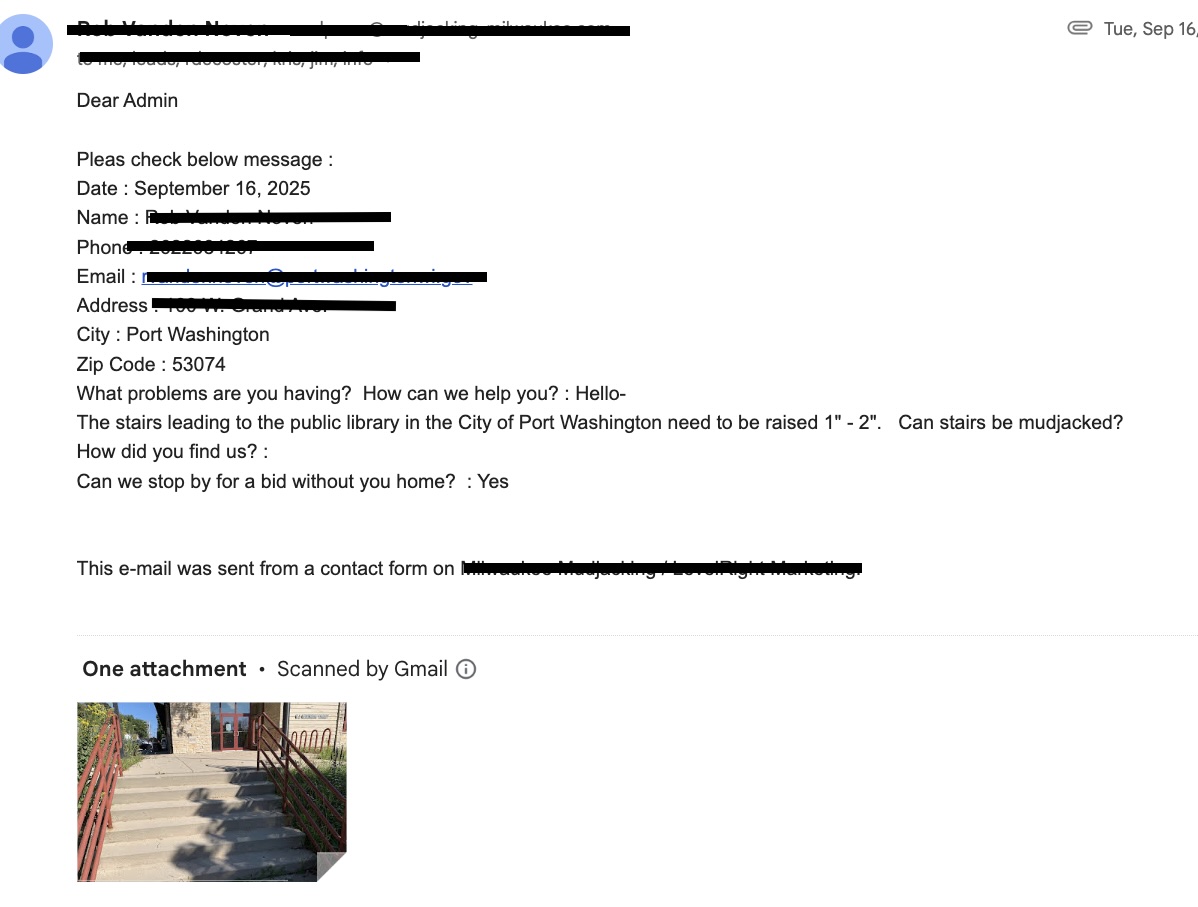
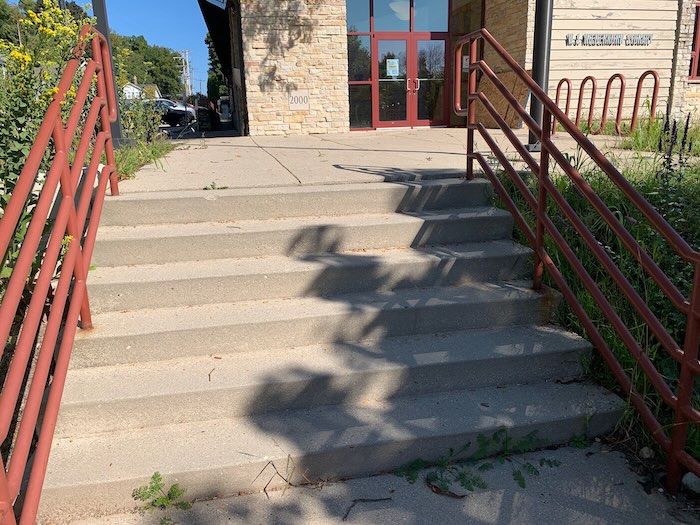
We recently got a lead for a local library. It’s a beautiful building—high traffic, community hub, lots of stairs and walkways—but the front steps have settled and need to come up an inch or two. Classic trip hazard. Classic public-safety concern. And the perfect kind of project to help you build trust with future municipal buyers.
This article breaks down how to close this kind of lead (speed, safety/ADA, cost, minimal disruption) and then turn the job into a repeatable marketing asset that helps you land more work with cities, schools, and public buildings.
Why Library & Municipal Jobs Are Different (and Valuable)
Public spaces carry more scrutiny than a driveway job. The stakes are higher—access, ADA, liability, and reputation for the site. That’s exactly why they’re powerful for your business: if a city trusts you with a front entrance to a library, homeowners and commercial managers will assume you’re the safe bet.
- Visibility: Hundreds or thousands of visitors see your results.
- Authority: Municipal logos and locations build instant credibility.
- Repeat potential: One city job can lead to parks, schools, and public works.
Address the Big Four Concerns Up Front
When you respond, talk to their real worries—not just “we lift concrete.”
1) Speed
Libraries can’t stay closed or restricted for days. Emphasize fast set times, same-day use in many cases, and off-hours availability. Offer to schedule before opening or after closing.
Libraries are great opportunities!
2) Safety & ADA
Make ADA compliance part of the conversation, not an afterthought. Show how your lift plan restores proper rise/run, reduces vertical displacement, and eliminates trip hazards at entrances and ramps. Mention barricades and signage during work.
3) Cost Savings vs. Replacement
Quantify: lifting typically costs a fraction of demo/replace and avoids long closures. Outline the soft costs of replacement (permits, demolition, curing time, total downtime) that lifting avoids.
4) Cleanliness & Disruption
Explain drill pattern, hole sizes, vacuuming dust, and a tidy exit. Promise a quiet, contained work zone and a quick site turn-back to staff and patrons.
Pro move: When you reply to the inquiry, include two photos marked up with arrows/notes and a 2–3 step “here’s how we’ll fix it” plan. It shows competence and reduces perceived risk.
How to Build a Bid That Wins
- Process clarity: Bullet out site protection, injection plan, leveling checks, hole patching, and cleanup.
- Timeline options: “After hours” or “before opening” windows, with estimated total site downtime.
- Warranty specifics: Put it in writing and speak to what’s covered.
- Compliance & insurance: COI ready, safety program, crew training.
- Comparable proof: If you’ve lifted steps, ramps, or government sites before, show one or two quick hitters.
For a deeper dive on scoping bigger jobs while staying protected, see How to Win Big Commercial Lifting Jobs (Without Getting Burned).
 Close Fast: What to Say and Send
Speed and clarity usually beat price in municipal work. When the request hits your inbox, reply same-day with:
- Short email summary of the problem and your plan.
- Two or three annotated photos showing where/why you’ll inject.
- Schedule choices (after hours, early AM) to minimize disruption.
- One-page estimate with clear scope, warranty, and completion window.
If you want language that helps convert, steal lines from our phone & follow-up frameworks here: What to Say on the Phone to Win More Jobs.
Execution Plan (So It Becomes a Case Study)
This job should become a flagship story for your brand. Plan your documentation before you pull the hose off the truck.
- Before photos: wide shots of the entrance plus close-ups of displacement and risers.
- Progress media: drilling pattern, injection moments, level checks, crew PPE, barricades in place.
- After photos: match the angles of your “before” shots and show corrected heights.
- Short video: a 30–60 second clip narrating the problem → solution → benefit (ADA/safety/uptime).
- Metrics: inches lifted, time on site, holes drilled/plugged, when access reopened.
Then publish a concise case study on your site and Google Business Profile. We outline a simple content workflow here: How to Use Job Photos & Videos to Grow Your Business.
Turn One Library Into Five More Jobs
After completion, ask for two assets: a short written testimonial and permission to use photos/video with the library’s name. Municipal name-drops carry weight in proposals.
- Outbound to departments: Send the case study to facilities, risk management, and public works within the same city.
- Neighboring cities: Share the case study with nearby municipalities and mention you can schedule off-hours to avoid closures.
- Niche pages: Add “Public Libraries,” “City Hall,” “Parks & Rec,” and “Schools” to your commercial service pages.
- Email your list: One “public entrance made ADA-safe in 3 hours” story builds authority with property managers.
Positioning line you can reuse: “We help public buildings restore safe access without demolition. Same-day use in most cases. Warranty included.”
Make Sure Your Website Can Win These Leads
You’ll get more high-trust leads like this when your website is built to rank and convert. Small sites rarely pull municipal work. If your site is thin, fix that first—then amplify with SEO. We explain why here: Stop Wasting Money on SEO If Your Website Sucks and here: Why Small Concrete Lifting Websites Fail (and Why You Need a Big One).
Also make sure you’ve got dedicated pages for every problem area (stairs, ramps, sidewalks, approaches, docking areas). That structure is key for both rankings and conversions: Pages for Every Problem Area You Fix.
Email & Proposal Snippets You Can Use
Borrow these lines for messages and estimates:
- Speed: “We can complete work before opening or after closing with same-day use in most cases.”
- Safety: “We’ll restore compliant rise/run, remove trip hazards, and maintain barricades and signage during work.”
- Clean: “Small, precise drill pattern; dust control; patch and color blend where applicable.”
- Value: “Lifting avoids demolition, concrete cure time, and long closures—typically a fraction of replacement.”
- Proof: “We’ll provide before/after measurements, photos, and a short completion report for your files.”
Your Post-Job Marketing Checklist
- Publish case study (photos, short video, testimonial).
- Add photos to Google Business Profile with a one-paragraph caption.
- Create a “Libraries & Public Buildings” page and embed the case study.
- Send a short email to property managers: “How we restored safe access at a public library in 3 hours.”
- Share one image + caption on social with a clear, non-sales call-to-action: “Need safe access without demo? DM for a site visit.”
Final Word
Library and municipal projects are more than jobs—they’re trust multipliers. Close them by speaking to what cities care about most: speed, safety/ADA, cost, and minimal disruption. Execute cleanly, document everything, and turn the work into a case study you can use for years. Then keep stacking assets—city pages, problem-area pages, photos, and local SEO—to make the next library email hit your inbox even faster.
Build assets. Not stress. Do the work right, show your proof, and let the work bring you more work.