Why Homeowners Finally Call a Concrete Lifter (And How to Sell to the Real Concern)
 By: Josh Fulfer
Estimated Read Time: 5 Minutes
We got a message from a homeowner the other day. In the note they said, “We’ve had this problem for years.” That line says a lot. Most people don’t call the same week they noticed their slab sank. They wait. They live with it. Then something happens, and they finally pick up the phone.
That “something” is the real reason they hire you. If you learn the why now, you can speak to the true concern and close jobs faster—often at better prices. This article gives you a simple way to uncover the trigger, match your pitch to it, and turn more estimates into wins.
Why People Wait So Long
Homeowners delay for three main reasons:
It doesn’t feel urgent. A small dip seems like an eyesore, not a problem. They think, “I’ll get to it later.”
They fear the cost. Many assume full replacement is the only fix. Replacement sounds expensive and messy, so they stall.
Life is busy. Kids, work, and bills push concrete down the list. Months turn into years.
Then a moment hits. That moment is your leverage. When you understand it, your sales message gets tight, simple, and strong.
The Real Triggers That Finally Make People Call
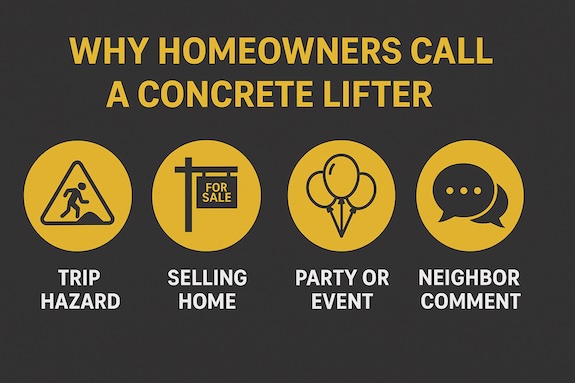
1) Someone Tripped
Maybe a child fell. Maybe a grandparent caught a toe on a raised edge. Now the hazard feels real—and so does the liability. Safety flips the switch from “someday” to “today.”
2) A Neighbor Commented
A quick chat at the mailbox. A friendly, “Hey, did you see your driveway sinking?” Pride matters. When someone else notices, many owners act. In many cases, concrete lifting is a luxury service – not a necessity – and people want to keep up with the Jones.
3) A Party or Big Event Is Coming Up
Graduation party. Backyard wedding. Family in town. They want the place to look sharp. A crooked patio is not the backdrop they want their guests to see.
4) Selling the Home or a Tough Inspection
Agents and inspectors flag sunken slabs. Buyers ask for credits. Owners realize a small fix now can protect the sale price and speed up closing.
5) Seasonal Pain: Water and Ice
Spring melt leaves puddles at the garage or water leaking into their basement. Winter brings ice sheets on the walk, or catching of a shovel. The same low spot suddenly feels like a big problem.
6) Frustration Boils Over
After years of looking at it, they’ve had enough. One more morning stepping over that edge, and they make the call.
Bottom line: people don’t buy foam. They buy relief from the trigger that finally got their attention.
How to Find Their “Why Now” on Every Call
Don’t guess. Ask simple questions and let them tell you. Use these three every time:
“How long has this been going on?” (Opens the story.)
“What made you reach out today?” (Reveals the trigger.)
“Are you fixing this for safety, looks, or resale?” (Clarifies the goal.)
Once they answer, mirror it back. When people feel heard, they trust you more. And trusted contractors win more work.
Match Your Pitch to the Trigger
If the Trigger Is Safety
Lead with peace of mind. “We can remove this trip hazard in a few hours so you don’t have to worry about family and guests. No demo, no mess.” Share a photo of a raised edge before and the same edge flat after. Keep it simple.
If the Trigger Is Looks (Neighbor or Party)
Talk about the finish. “We place smaller holes where the scope allows and patch them cleanly so the surface looks almost untouched.” If they have stamped or colored concrete, mention clean patches and placement along grout lines. Link them to a quick visual.
Related read: Why 3/8″ Drill Bits Win Jobs in Concrete Lifting (how small holes help you win appearance-focused buyers).
If the Trigger Is Selling the Home
Use the resale frame. “Leveling boosts curb appeal and avoids inspection hold-ups. It’s fast, clean, and often costs far less than replacement.” Keep one before/after driveway photo ready for this exact case.
If the Trigger Is Seasonal Pain
Point to water control and safety. “Lifting stops the pooling and reduces ice risk. Most jobs finish the same day, so you can drive or walk safely again.”
If the Trigger Is Pure Frustration
Sell speed and simplicity. “We’ll be in and out in a few hours. No tear-out. No waiting on cure like replacement.” People who are “over it” want a fast, clean fix.
Put the Triggers in Your Marketing
Work these messages into your website, estimates, and Google Business posts. Speak to the moment that finally made them call:
• “Tired of tripping over uneven concrete? We fix it in hours—no demo.”
• “Selling soon? A level driveway helps buyers say yes faster.”
• “Hosting a party? Get your patio photo-ready this week.”
Pair each line with the right photo. A clean before/after tells the story faster than any paragraph can.
Train It. Film It. Scale It.
Make “find the why” part of your sales SOP. Then film real examples. Record two-minute clips of: the quick phone questions you ask, the simple estimate walk-through, and the way you present photos matched to the trigger. Store those clips in one place and have new team members watch them on day one.Film once. Reuse for training, sales, and website content.
From Quote to Close: Show the Finish
Many buyers care most about how it will look when you leave. Don’t ignore that. In your estimate, include one close-up of a clean patch and one wide shot of a lifted slab. For appearance-focused clients, it’s smart to mention smaller holes (where the scope allows) and tidy patches. This small detail builds trust and smooths pricing conversations.
Sample Script You Can Use Today
“How long has this been going on? Got it. What made you reach out today?” (Listen.)
“That makes sense. Here’s how we’ll solve that: we’ll lift this panel back to level, place smaller holes where the scope allows, and leave a clean finish. Most jobs wrap in a few hours. You’ll have a safe, level surface—without the mess or cost of replacement- and grandma won’t trip when she comes over.”
Final Thoughts
Maybe someone tripped. Maybe a neighbor commented. Maybe there’s a party on the calendar. Maybe an inspector flagged it before a sale. The reason they waited for years doesn’t matter. The reason they called today does.
Find the “why now.” Say it back to them. Show the exact proof that fits that trigger. When you do, you stop selling foam and start selling peace of mind—and that’s what buyers pay for.
Keep it simple. Ask good questions. Show clean work. Close the job.