
How to Start a Concrete Lifting Business | 2026
 By: Josh Fulfer
Read Time: 14 minutes
The Ultimate Concrete Leveling & Slab Raising Startup Guide | For Poly & Mudjacking
Starting a concrete lifting business – also known as concrete leveling, concrete raising, or slab-jacking – can be a profitable venture in the booming concrete repair industry. Uneven concrete slabs are a common problem for homeowners, municipalities, and businesses, and slab lifting provides a faster, cost-effective solution compared to full replacement. This guide will walk you through everything you need to know to launch a successful concrete lifting enterprise, from understanding the market opportunity to setting up your business legally, obtaining training, investing in the right equipment, and implementing marketing strategies that attract customers. By following these steps and best practices, you can establish a strong foundation (both literally and figuratively) for your concrete raising startup and position yourself for long-term growth in this niche.
Summary
- Understanding Concrete Lifting and the Market Opportunity
- Business Formation and Planning Basics
- Training and Education: Learning the Trade
- Equipment and Vendor Considerations
- Hiring and Staffing Considerations
- Choosing a Location and Service Area
- Building Your Online Presence: Website and Domain Strategy
- Setting Up Your Google Business Profile (Google My Business)
- Marketing Strategies to Grow Your Slab Lifting Business
- Social Media, Networking, and Other Marketing Tactics
- Timeline and ROI: Setting Realistic Expectations
- Conclusion
1. Understanding Concrete Lifting and the Market Opportunity
What is Concrete Lifting?
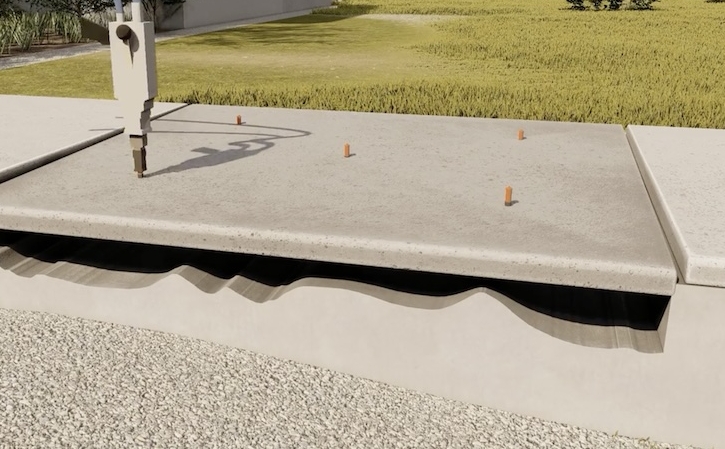
Concrete lifting (or “slab lifting” and “concrete leveling”) is a repair technique to fix sunken or uneven concrete slabs by injecting material underneath to raise them back to level. Traditional mudjacking uses a slurry of cement, sand, and water, whereas modern polyjacking uses expanding polyurethane foam. In both cases, small holes are drilled in the slab and material is pumped below to fill voids and lift the concrete. The polyurethane foam method has become very popular due to its light weight, quick cure time, and minimal disruption – often the slab can be used within hours, not days, after repair. This foam technique is sometimes referred to as “foam concrete lifting,” and it’s prized for being a long-lasting, water-resistant solution among concrete repair options.
Why a Growing Market?
The market opportunity for concrete lifting is strong because thousands of aging driveways, sidewalks, patios, and warehouse floors develop voids or settle over time. Property owners increasingly prefer raising settled slabs instead of the costly, messy process of tearing out and re-pouring concrete. Slab lifting is an “economical alternative to complete concrete replacement”, often costing a fraction of replacement and extending the life of the concrete. Moreover, awareness of the technology is growing. For example, uneven concrete poses liability risks, and some insurance companies are starting to require homeowners and businesses to address trip hazards – which could further increase demand for leveling services. Broadly, there are three key customer segments for slab lifting: residential (e.g. homeowners with sunken sidewalks or pool decks), commercial (office parks, apartments, etc.), and municipal (city sidewalks, schools, etc.). All three segments value a solution that quickly fixes safety hazards and avoids the expense and downtime of replacement.
Profit Potential.
Concrete raising can be a highly profitable business when run efficiently. The services are in high demand yet can be performed with relatively low ongoing overhead once you have the equipment. A single residential job can command anywhere from a few hundred to a few thousand dollars, often for just an hour or two of work on-site. Material costs (especially with polyurethane foam) are a small portion of the job revenue, which means profit margins per job can be excellent. One polyurethane lifting contractor noted that despite never having worked in the trades before, he was drawn to concrete lifting because it “required little physical effort and could command very high profit margins”. Of course, actual profitability will depend on factors like your local pricing, volume of work, and how well you manage expenses, but the business has strong income potential if you can generate leads consistently.
It’s worth noting that some entrepreneurs enter this field by buying into a concrete leveling franchise (for example, there are franchise networks in concrete leveling that offer training and brand recognition). Franchises can provide a turnkey business model, but they come with franchise fees or revenue sharing. Many new contractors opt to start an independent slab lifting business so they keep 100% of their profits and maintain full control. If you choose the independent route, you’ll need to be proactive in learning the trade and marketing on your own – which this guide will help you do. Next, we’ll cover the essential steps to formally set up your business before you lift your first concrete slab.
2. Business Formation and Planning Basics
Create a Business Plan.
 Before spending a dime on equipment, take the time to draft a basic business plan for your concrete lifting venture. Think of it as your roadmap – if someone asked you to drive cross-country, you wouldn’t just start driving without a plan, and the same logic applies here. Outline your service offerings (e.g. residential concrete leveling, commercial slab jacking, joint sealing, concrete sealing, etc.), target service area, initial pricing strategy, and expected expenses. Determine how you will fund startup costs – whether through savings, a small business loan, or equipment financing. A business plan is also useful (even required) if you seek financing, and it will help keep you focused on achievable goals in the critical first year.
Choose a Business Structure.
Decide on a legal structure and register your business. Many small contractors form a limited liability company (LLC) for the liability protection and tax flexibility. An LLC separates your personal assets from business liabilities – important in a trade like concrete repair in case of any unforeseen damages or lawsuits. Register the LLC (or corporation/partnership, if you choose differently) with your state and obtain any required business licenses. In the concrete repair field, you should also research contractor licensing requirements for your state or municipality. Some states require a specific concrete contractor’s license or a general contractor’s license to perform repair work above a certain amount. Check with your state contractor’s board or local authorities – operating without proper licensing can result in fines or inability to pull required permits. It’s wise to meet any licensing requirements from day one to build credibility with customers.
Permits, Insurance, and Other Essentials.
Secure the necessary business insurance before you start taking clients. At minimum, obtain general liability insurance (to cover property damage or injuries that could occur while you’re working on a job). For example, if you accidentally crack a customer’s window or a lifted slab causes someone to trip during the process, you want insurance to handle the claim. A $1 million liability policy is a common starting point for contractors. Additionally, if you have employees, workers’ compensation insurance will likely be legally required to cover any on-the-job injuries. Don’t forget commercial auto insurance for your work truck or rig. You may also consider a bond if required for certain municipal jobs or for marketing assurances (being “licensed and bonded” can reassure consumers). Finally, apply for an Employer Identification Number (EIN) from the IRS (if in the US) so you can pay business taxes, and open a business bank account to keep finances separate.
Name and Domain Considerations.
When you choose your business name, try to pick a name that clearly reflects what you do. Including keywords like “concrete lifting,” “concrete leveling,” or “mudjacking” in the company name can give you a slight edge in online visibility. For example, a name like “Precision Concrete Lifting of Ohio” immediately tells customers (and search engines) what you specialize in, whereas a more generic name like “Precision Solutions” might be ambiguous. However, keep it fairly short and easy to remember. Once you have a name, register a matching “.com” domain for your website. Ideally, the domain should be your company name or a close variant, without hyphens or odd spellings. Domains are inexpensive (usually around $10–15/year from providers like GoDaddy), so secure yours early. We’ll discuss website setup more in a later section, but having your business name and domain aligned will make branding and marketing smoother from the start.
Startup Costs and Funding.
It’s important to understand the upfront investment required for a concrete lifting startup. Your single biggest expense will likely be your equipment rig (more on equipment in the next section). A new trailer rig outfitted for polyurethane slab lifting can cost anywhere from about $50,000 to $80,000, depending on the configuration. For instance, one company sells a “Starter Foam Jacking Rig” package for around $49,000 that includes the trailer, proportioner, generator, hoses, and injection gun.
In addition to equipment, budget a few thousand dollars for initial material (foam resin kits or mudjacking slurry materials), training costs, insurance premiums, marketing (website, initial advertising), and working capital to carry you until the revenue starts flowing. Many new owners find that a total investment in the range of $50k–$100k gets the business off the ground. One real-world example: an entrepreneur named Bill reported that “the cost of entering the business at $55k included every piece of equipment he would require as well as training” through an equipment supplier. He chose an independent route (not a franchise) so that his upfront cost was all towards equipment/training and he retained full ownership. Whether you self-fund or seek a small business loan, plan your financing so that you aren’t caught by surprise when purchasing your rig and other necessities.
3. Training and Education: Learning the Trade
Get Hands-On Experience.
Concrete lifting is a skilled trade – it’s not rocket science, but there is a learning curve to doing it safely and effectively. If you’re new to the industry, one of the best ways to learn is by shadowing an experienced contractor before you fully launch. In fact, many successful concrete lifters recommend finding someone in a different city or state (so you’re not direct competitors) and asking to ride along on a few jobs. Offer to help out or buy lunch in exchange for the opportunity. A single day watching a pro inject foam, handle the equipment, and troubleshoot on-site issues can teach you things that might take months to figure out on your own. Use industry forums or Facebook groups to connect with potential mentors (more on these groups below). You’d be surprised – many seasoned contractors are willing to share knowledge if you approach respectfully, since they remember what it’s like to start fresh.
Join Industry Communities.
Take advantage of free knowledge sources by joining online communities where concrete leveling professionals gather. Two highly active Facebook groups worth joining are “Concrete Lifting World Wide” and “Polyjacking World Wide”.  These groups (each with thousands of members) are gold mines for newcomers. Lifting contractors from all over share photos, ask questions, discuss equipment issues, and give honest advice. If you run into a tricky problem – say, your pump isn’t building pressure or you’re unsure how to lift a certain kind of slab – you can post the question and often get quick input from people who have faced similar challenges. The community vibe is usually supportive- no egos, just help, making it a great place to accelerate your learning. Beyond Facebook, you’ll find tutorial videos on YouTube; in fact, some companies and contractors run educational channels. A couple of recommended channels include HMI (a respected equipment/training company) which shares rig walkthroughs and foam demos, and the FoamWorks or Concrete Hero channels which show real job footage with explanations. Watching these will supplement your hands-on training and help you visualize different lifting scenarios.
Formal Training Programs.
While on-the-job learning is invaluable, don’t overlook the option of attending a formal concrete lifting training course. Several industry manufacturers and experts offer multi-day training classes that teach both the technical and business aspects of slab lifting. For example, HMI (Hydraulic Mudpumps Inc.) – one of the most established names in the field – hosts a two-day Discovery & Training Seminar covering how to run a concrete raising business, differences between mudjacking and foam, equipment operation, and even marketing basics. Alchemy-Spetec (now Alchatek), NCFI, and Huntsman Building Solutions are among other organizations with hands-on training programs for new slab lifters. These programs often include real demonstrations of lifting foam under slabs, safety best practices, and sometimes even sales training or estimating guidance. Many also provide ongoing support – for instance, HMI runs an “HMI University” for their customers and offers crew shadowing opportunities after the initial seminar.
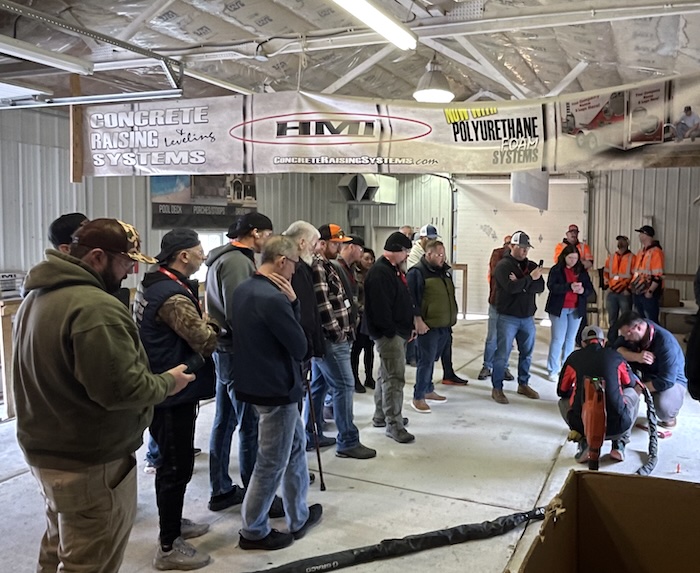 Formal training does come at a cost (often a few hundred to a couple thousand dollars), but it can jump-start your expertise and help you avoid costly mistakes early on. Modern training classes offer real foam application, sales training, business guidance, and safety walk-throughs – ideal for new owners who want a strong foundation or employees who need structured learning. Consider investing in such a course if you can; it also doubles as a networking opportunity with others starting out.
Continuous Learning Mindset.
Even after you’ve got the basics down and you’re lifting slabs for customers, stay curious and continue learning. New products (like improved polyurethane foams), new equipment, and better techniques are always emerging. Subscribe to industry blogs, join associations, and keep engaging in those online groups. The best people in this business will tell you that the learning never really stops. Additionally, make it a habit to review your own jobs and outcomes – if a slab you lifted sinks again or a customer has an issue, treat it as a lesson to improve your process. Over time, your growing expertise will become a selling point that sets you apart from less-prepared competitors.
4. Equipment and Vendor Considerations
Outfitting Your Concrete Lifting Rig.
The core of your operation is your slab lifting rig – essentially, a mobile unit carrying all the gear needed to perform a job. Many startups purchase a trailer-based rig (often a 14–16 ft enclosed trailer) that houses a material proportioner, pumps, generator, compressor, and hose reels. Think of the rig as “a rolling business unto itself… a self-contained, turnkey unit” with all necessary equipment. Key components of a polyurethane foam rig typically include:
- Trailer or Truck: An enclosed cargo trailer or box truck to hold everything. This keeps your equipment secure and climate-controlled (important for chemical materials). Some choose box trucks or even van-mounted systems for easier mobility.
- Power Source: A generator (often 10kW or larger) to provide electricity for your pumps and heater. Foam rigs need power to heat the materials and run the system.
- Air Compressor: Many setups include an air compressor which, in foam rigs, assists the proportioner and can also be used to power pneumatic tools (like the drill for making injection holes).
- Proportioner Pump: The heart of a foam rig – this machine precisely mixes the two components of polyurethane foam in the correct ratio and heats them to the right temperature for injection. Common models are from manufacturers like Graco or PMC. For mudjacking rigs, instead you’d have a heavy-duty mud pump to mix and pump the grout slurry.
- Hoses and Gun:
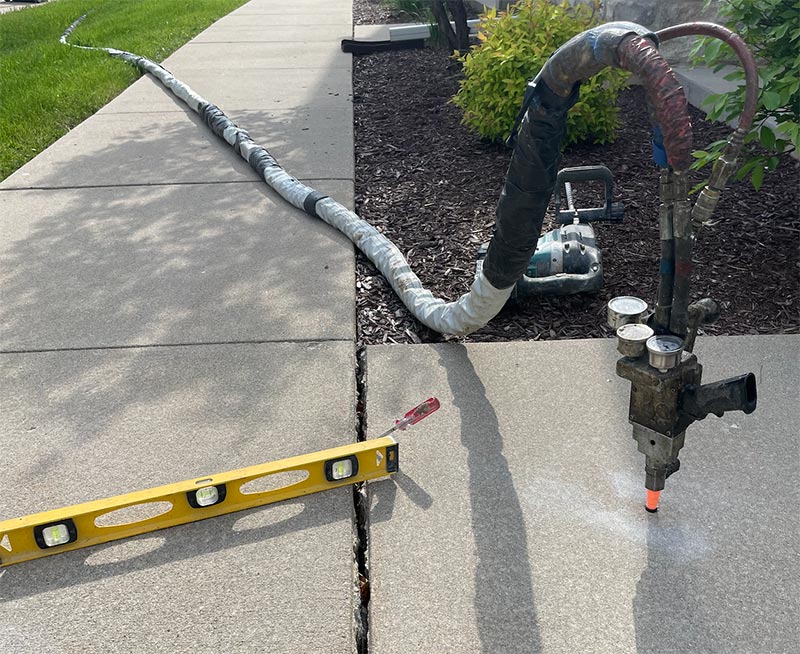 Heated hoses (often 100–200 feet) carry the mixed foam from the rig to the application point. At the end of the hose, an impingement gun or injection gun is used to inject the foam under the slab. This is a special gun that combines the chemicals at the nozzle. (In mudjacking, the hose would carry slurry to a nozzle instead.)
 - Additional Accessories: There are many other items in a well-stocked rig: transfer pumps (to move material from drums to the proportioner), hose heaters, spare injection ports, drill bits, hand tools, and material storage. A slab lifting rig generally contains material sets, heated hose extensions, electric drill, transfer pumps, and other equipment pieces to complete your job. If doing mudjacking, you’d also have a paddle mixer for the grout slurry (for mixing sand, cement, water) and possibly a water tank.
If you opt for mudjacking initially to save costs, the equipment list is simpler: a specialized hydraulic mudjacking pump, a mixer, and a supply of mud slurry ingredients (typically a mix of sand or fly ash with cement and water). Mudjacking pumps are cheaper than a full foam rig, but the trade-off is larger drill holes, heavier material, and more labor per job. Industry trends show many new businesses (and homeowners) choose polyurethane for its advantages, even if the upfront rig cost is higher.
Tools and Safety Gear.
In addition to the big-ticket equipment, don’t forget the basic tools of the trade. You will need a heavy-duty rotary hammer drill with long 5/8” or 3/4” or 3/8” masonry bits to drill injection holes in concrete. A good drill (and backup bits) is essential – concrete will dull bits quickly. Have a supply of injection ports (plastic or metal ports that you install in the drilled holes to inject foam through). For patching holes after lift, keep bags of rapid-set cement or grout on hand, as well as a mixer bucket and trowels for finishing the patch flush. A slab jack also benefits from measuring tools (to monitor lift progress) – for instance, a laser level or simple straight edges to gauge when the slab has risen to the desired height. Also, always stock proper Personal Protective Equipment (PPE) for you and any helpers: safety glasses, gloves (chemical-resistant gloves for handling foam chemicals), hearing protection (for noisy drills and generators), and respirators if working in enclosed spaces with chemical fumes. Don’t overlook knee pads or kneeling boards; much of your work involves kneeling on concrete while drilling and patching. Steel-toe boots are advisable for construction work as well. Having the right safety gear not only protects you but also presents a professional image to customers who will notice if you take safety seriously.
Choosing Vendors for Equipment and Foam.
Selecting reliable vendors and suppliers is critical. You will need a source for your polyurethane foam chemical kits or mudjacking slurry materials. Many rig suppliers bundle the first set of materials with the rig purchase. Major industry suppliers include HMI, Alchemy-Spetec (Alchatek), NCFI, Specialty Products Inc (SPI), and others – each offers their own foam formulations and equipment packages.  When evaluating vendors, look for more than just price; consider the support and advice they offer. Ideally, your supplier will act as a partner who can answer technical questions and help troubleshoot issues with pumps or foam reactions. As one slab lifting expert put it, you want “a dependable, knowledgeable supplier who will not only sell you slab lifting pumps, guns and foams – but also serve as a trusted advisor”. Ask if they provide training (many will train you on using their product), warranty service for equipment, and reasonable lead times on foam refills. You don’t want long downtime because you can’t get material during peak season. It’s also wise to keep a relationship with at least two suppliers if possible, so you have backup options for materials. For mudjackers, local concrete material yards might supply the sand/cement mix; for foam techs, you’ll be ordering drums or sets of polymer (usually 55-gallon drums or smaller kits). Plan storage for these materials – foam chemicals should be stored within certain temperature ranges (often 50–90°F) to remain in good condition.
Invest in Quality.
Finally, invest in the best equipment you can reasonably afford. Your rig and tools are the lifeblood of your business – if the pump breaks down, your revenue stops until it’s fixed. Higher-quality machines (from reputable brands) often have higher upfront cost but will be more reliable and serviceable. Many new business owners have made the mistake of buying used or very cheap equipment to save money, only to lose more in downtime and repairs. That said, a gently used foam rig or mudjacking setup can sometimes be a cost-saving find if you verify its condition. Just be cautious and, if possible, have the seller demonstrate it working. Whether new or used, maintain your equipment meticulously: perform recommended maintenance on the proportioner, keep your injection gun cleaned and lubricated, and winterize your rig if you live in a cold climate (foam components can be ruined by freezing). A well-maintained rig will serve you for many years and enable you to take on lucrative large projects (e.g. commercial warehouse floors or municipal contracts) as you grow.
5. Hiring and Staffing Considerations
Starting as an Owner-Operator.
Many concrete lifting businesses start as a one-person operation or a small family business. In the beginning, you might handle everything – from answering inquiry calls and doing site inspections/estimates, to performing the slab lifting work and sending invoices. This is feasible, especially with the efficiency of polyurethane lifting (one person can run a rig and lift smaller slabs alone). However, having at least one helper or co-founder can make jobs safer and quicker – for example, one person can drill holes and set ports while the other runs the injection gun, or one monitors lift height while the other controls the pump. If you start solo, plan to eventually hire once you have a steady volume of work, so you can take on multiple jobs a day or handle larger slabs that require two sets of hands.
Qualities to Look for in Technicians. 
When it comes time to hire employees or crew members, look for people with a mix of physical ability, mechanical aptitude, and good customer service demeanor. The work involves handling heavy equipment (moving hoses, drilling, etc.) and sometimes hauling 55-gallon drums of material, so physical fitness and safety awareness are important. Construction experience (in concrete, landscaping, plumbing, etc.) is a plus, but you can also train someone from scratch if they are eager to learn. More important is reliability and honesty – since this is a small business, each hire will represent your company on homeowners’ properties. Many owners prefer to hire a trusted family member or friend initially. Ensure anyone you hire has a valid driver’s license and a clean driving record if they will drive the rig or company truck.
Training Your Crew.
Be prepared to invest time in training new employees. Even if they have construction experience, they likely haven’t done slab lifting unless coming from a competitor. You can leverage the same training resources for employees that you used yourself: send them to a formal training class if feasible, have them watch you on jobs for a few weeks, and encourage them to join the Facebook groups or online forums to ask questions and learn. The learning-by-doing approach works well – perhaps start them on simpler tasks like drilling holes and mixing patch material, then gradually have them operate the injection gun under supervision. Always stress safety protocols, such as how to handle the foam chemicals properly (gloves, avoiding spills), safe lifting techniques for heavy objects, and how to respond if a slab shifts or a hose leaks. As your team’s skills grow, you might eventually split tasks (one person handles estimates/sales, while one or two focus on production work). Some concrete lifting businesses grow to have multiple crews; if that’s your aim, building a reliable team from early on is crucial.
Office and Support Roles.
In the early days you might not need any office staff, but as you ramp up marketing and start getting daily calls, consider who will handle customer inquiries and scheduling. If you’re out on a job site, you may not be able to answer every call – missing calls means missing leads. You could hire a part-time office assistant or use a call answering service to ensure every prospective customer talks to a live person. Additionally, if paperwork and bookkeeping aren’t your strengths, look into hiring a bookkeeper (or using bookkeeping software) early on to keep your invoices, expenses, and taxes in order. The smoother your backend operations, the more you can focus on performing the work and generating revenue.
Seasonality and Workforce Planning.
Be aware of the seasonality in this business- mostly for guys in the northern states. In colder climates, concrete lifting work may slow down or pause in the winter months (freezing temperatures can hinder both foam and mudjacking processes, and demand drops when everything is covered in snow). Plan your hiring and cash flow accordingly – you may use a smaller crew or focus on indoor projects during the off-season, and ramp up with additional part-time labor in the spring/summer when demand peaks. Some contractors keep their crew busy in winter by cross-training in related services (like foundation crack repair or winter equipment maintenance) or by focusing on marketing and training during the downtime. Communicate clearly with any employees about the seasonal nature, so they know what to expect (for instance, you might have a 6-8 month heavy work season and a lighter schedule in winter). This transparency helps you retain good workers year to year.
6. Choosing a Location and Service Area
Home Base vs. Commercial Location.
One great aspect of a concrete lifting business is that you often don’t need a fancy storefront or shop, at least not initially. Many successful slab lifters run the business from a home office and keep the rig at home if space allows. For example, some owner-operators store their trailer or foam rig in their garage or on their property (assuming local zoning allows it). This can save a lot on rent. The key requirements are: a secure place to park the rig, some storage area for materials (which might need to be climate-controlled if you’re in an extreme climate), and possibly a small workshop space for maintenance. As you grow, you might consider renting a small warehouse or yard space, especially if you have multiple vehicles or need bulk material storage. But in the beginning, don’t overextend on facility costs – many concrete leveling companies operate effectively without a public-facing location. Customers rarely need to come to you; you’ll always be going to the job sites.
Defining Your Service Area. 
Deciding on the geographic area you’ll serve is an important strategic choice. Too small an area could limit your customer pool, but too large an area and you’ll spend a lot of time (and fuel) driving between jobs. Start by assessing the population and development in your region. Ideally, you want to cover a radius that includes plenty of suburban neighborhoods (for residential work) as well as any nearby cities or towns with commercial prospects. Many new concrete lifting businesses begin with roughly a 30 to 50-mile radius from their base. You can always adjust based on demand – if you find a lot of business one county over, you might extend there. In broad terms, slab lifting is needed everywhere concrete exists, but focus on areas with older infrastructure (where slabs are starting to settle) and growth areas (newer homes whose backfilled soil might be sinking a bit). You might identify some “hot zones” like specific suburbs or communities known to have expansive clay soil (which causes settling). Plan to target those in your marketing.
Competition and Differentiation.
Research the competitors in your region. How many other concrete leveling or foundation repair companies operate nearby, and what services do they offer? Some areas might have several mudjacking businesses but no one specializing in polyurethane; that could be an opening for you. If the market is saturated with big franchise operations, you’ll need to differentiate – perhaps by more personalized service, faster response, or competitive pricing (though never race to the bottom on price without understanding your margins). Knowing your competition also helps you set your service area boundaries – you might focus on territories that are underserved. Keep in mind, even if competitors exist, the demand is often high enough to support multiple players, especially if you excel at marketing.
Location and SEO.
One factor to consider is that your business’s physical address can influence your online marketing (Local SEO). When you set up your Google Business Profile (next section), Google will associate you with a certain area. Some contractors choose an address in or near a major metro they want to target (even if they live further out), sometimes by using a virtual office or a relative’s address, in order to appear more centrally in that market. While you should not violate Google’s guidelines (they prefer you use your real, staffed location), it is worth strategizing: if you live very far from the city you want to serve, you might consider using a serviced office address in the city for business registration and Google listing purposes. Additionally, if you cover multiple cities (e.g., two metro areas 100 miles apart), you might eventually open a second “location” or have separate pages on your website for each. In the beginning, focus on dominating your primary city/region before stretching too wide.
Climate and Operating Season.
The physical location also dictates your working season. In warm southern climates, you may operate year-round. In northern areas, you might shut down or significantly slow in winter when the ground is frozen. Plan how you will handle winter: Will you travel to do jobs in warmer areas? Switch to indoor concrete lifting (some contractors do interior warehouse floors year-round)? Or simply use the off-season for maintenance and planning? Also, climate affects your material handling – foam components must be kept above freezing, and even the reaction can be slower in cold weather, so you may need to pre-warm materials. In very hot climates, providing shade for your rig or running cooling fans might be necessary to keep the chemical temps in range. Understanding your local conditions and how they affect your service will prevent headaches and ensure you can deliver quality results regardless of season.
7. Building Your Online Presence: Website and Domain Strategy
The Importance of Digital Presence.
In today’s market, a strong online presence isn’t optional – it’s essential for attracting customers. The majority of your potential clients will find services like concrete lifting by searching online (e.g. Googling or AI searches for things like “concrete leveling near me”). In fact, experienced industry marketers have found that the most effective way to generate new concrete lifting business is through a combination of a great website, long-term SEO to rank on Google, and online ads, complemented by lots of positive customer reviews. This means you should prioritize getting a professional website up and running, and cultivating your visibility on search engines and social media. A well-designed website with targeted, keyword-rich content can continuously bring you leads 24/7/365, acting as your virtual sales rep.
Secure Your Domain and Branding.
As mentioned earlier, secure a good domain name early – ideally matching your business name. A .com domain is still the gold standard (avoid unusual ones like .biz or .net if possible). Keep it simple and relevant (for example, TriCountyConcreteLeveling.com or LevelRightConcrete.com). Along with the domain, invest in a professional logo and consistent branding for your company. A polished logo on your website (and eventually on your truck and business cards) builds trust – it signals that you are a legitimate, established business. You can hire a graphic designer or use online logo tools to create one, but ensure it looks clean and relates to concrete or lifting in some way (even a simple text logo with a small graphic of a lifted slab can work). Also set up a branded business email address (through Google Workspace or similar) so that your communications come from yourname@yourdomain.com rather than a personal Gmail – this costs only a few dollars a month and appears far more professional.
DIY vs. Professional Website.
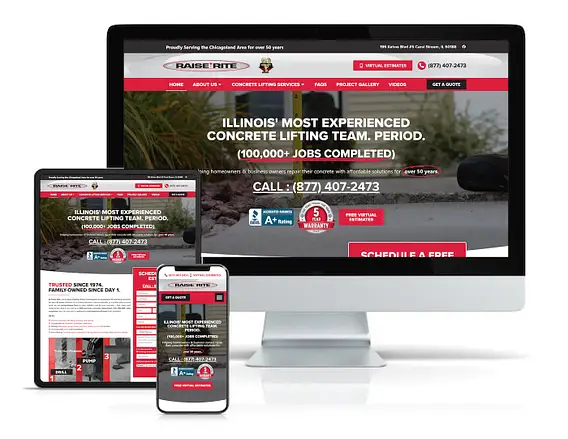 When it comes to building your website, you have a couple of routes. If you have some technical and writing ability, you might start with a DIY website builder (WordPress, Wix, Squarespace, etc.). However, remember that simply having a website is not enough – it needs to be optimized to rank well and convert visitors into leads. Many new contractors start with a very basic one-page “brochure” site to save money, which is okay as an interim solution. A one-page site can list your services, contact info, and maybe a few photos. Just note that a tiny website is unlikely to rank highly on Google for competitive keywords. Google and AI searches tends to reward sites that have more depth and content. So, while a one-page site is better than nothing (and useful if you are relying on referrals to look you up), it isn’t usually going to rank well on Google for attracting new customers via search. The ideal approach, when budget allows, is to develop a comprehensive lead-generation website with multiple pages targeting all the key aspects of your service.
Features of a Strong Website.
A high-converting concrete lifting website typically includes:
- Dedicated Service Pages: Create separate pages for each service or application you handle – e.g. Driveway Leveling, Sidewalk Repair, Garage Floor Lifting, Pool Deck Lifting, etc. On each page, describe the problem (why slabs sink) and how your solution works, and include relevant keywords and photos. This helps you rank for specific searches like “pool deck leveling” and also shows customers you handle their exact issue.
- About and Contact Pages: Don’t forget an “About Us” page telling your story (even if brief – it can highlight your experience or commitment to quality) and a “Contact” page with a form and your phone number. Make it extremely easy for visitors to contact you – display your phone and email prominently, possibly in the header or footer of every page.
- FAQ and Blog Content: Adding a frequently asked questions section or a blog with articles can greatly boost your content volume and SEO. You might write articles like “Polyurethane vs Mudjacking – Which is Better?” or “How Much Does Concrete Leveling Cost?” or case studies of your successful jobs. These not only help with SEO but also educate your customers. Providing lots of useful content that speaks to customer needs will signal to Google that your site is authoritative. In general, aim for your homepage to have at least 1,500 words of useful content and each major service page to have ~750 words. Longer content (when well-structured) tends to rank better and can convert more leads by answering questions upfront.
- Photos and Testimonials:
 Include before-and-after photos of lifted slabs if you have them (you can often get stock images or use supplier-provided examples when starting out). Also include any testimonials or reviews from initial customers – even one or two satisfied clients’ quotes can build credibility for new visitors. If you have a YouTube or promotional video, embed it on the site to engage visitors.
 - Mobile-Friendly Design: Ensure the site is mobile-responsive. A large portion of homeowners will be searching and viewing your site on their phones. A mobile-friendly, fast-loading site not only pleases users but is also favored by Google’s ranking algorithm.
Building such a comprehensive site is certainly more work and may require hiring a professional web designer/content writer who understands your industry. However keep in mind, concrete lifting is a very niche industry, and most generic web designers won’t know much about this industry and you may have to provide them with significant direction and content. If you hire outside help, find someone with experience in contractor or home services websites. Budget-wise, a small one-page site might cost a couple thousand dollars, whereas a full-featured 20+ page site with SEO can range from $5,000–$15,000 or more (depending on who does it). This is a significant investment, but keep in mind your website will be your primary lead generator over time. Many concrete lifting businesses find it absolutely “well worth it” to invest in a robust website, as it will pay for itself in jobs. If budget is tight, you could start small but plan to expand your site as you get your first few projects (reinvest some profits into adding content/pages).
On-Page SEO: Using the Right Keywords. 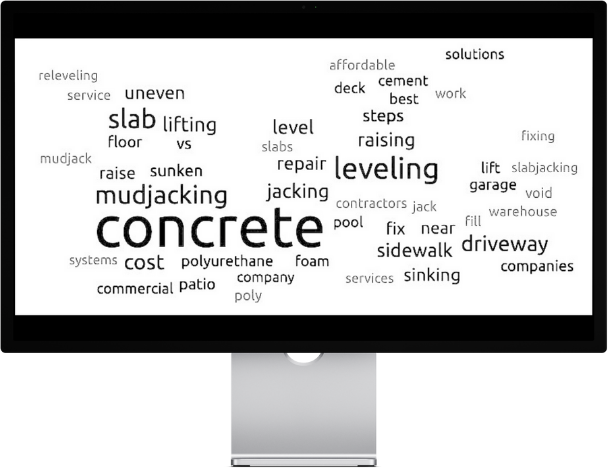
As you build out your site content, be mindful of the keywords and phrases that people are likely to search for – and use them naturally in your text. High-value keywords for this industry include terms like concrete lifting, concrete leveling, concrete raising, slab jacking, mudjacking, polyurethane foam jacking, and so on. If you serve a specific city or region, include those location names in your titles and headings (e.g., “Concrete Leveling in Dallas, TX”). Be sure to use the actual words people are searching for when they need their concrete fixed on your site, otherwise it’s going to be hard to reach new customers. For example, use a phrase like “sunken concrete driveway repair” if you want to capture that search query, or mention that you “lift and level concrete slabs using polyurethane foam” to hit those LSI terms (latent semantic indexing terms) that relate to your service. However, avoid keyword stuffing – the content should read naturally and be written for humans first, while still including those important terms. A good practice is to have a section on your homepage that lists all the types of jobs you handle (driveways, sidewalks, patios, etc.) and all the areas you serve – this creates a rich set of keywords that improve your relevance to many searches.
8. Setting Up Your Google Business Profile (Google My Business)
Why Google Business Profile Matters.
In addition to your website, the single most important online asset for a local service business is your Google Business Profile (GBP) (formerly called Google My Business). This is the listing that appears on Google Maps and in the local “3-pack” of map results when someone searches for local concrete services. It’s free to create, and it allows your business to show up with a phone number, address, hours, and customer reviews right on Google search results. A well-optimized Google Business listing is essential for local SEO and helps customers easily find and contact you. Many customers will call a business directly from the Google listing without even clicking through to the website, so do not skip this step.
Setting Up and Verification. 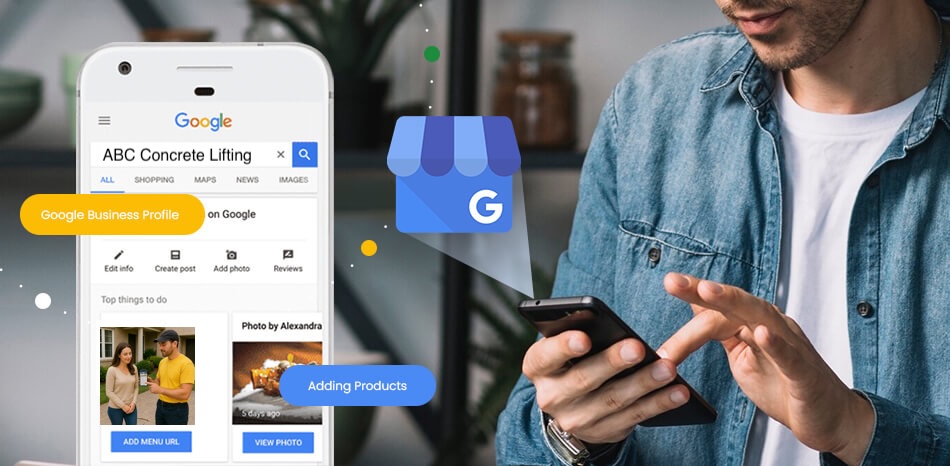
To get started, go to business.google.com and sign in with a Google account. You’ll go through the process of entering your business name, address, phone, website, hours, and category. Google will then require verification that your business is legitimate. The verification methods can vary; traditionally Google mails a postcard with a code to your business address, but recently they often require additional proof. For a new concrete lifting business, Google may ask for documentation of your business (like an LLC registration or utility bill) and even a short video verification. It’s not uncommon for Google to have you upload a video showing your work truck, equipment, or signage with your business name as evidence that you are a real local business. This process can feel tedious – it might take anywhere from a half hour to a few hours and sometimes requires follow-ups with Google – but be patient and get it done early. **Pro Tip:** If you run your business from your home address, when setting up GBP there is an option to designate yourself as a “Service Area Business.” Make sure to choose that, which will allow you to hide your exact address on the public listing (it will just show the city). This way you maintain privacy but still appear in the areas you serve.
Optimize Your Profile.
Once verified, you should fully optimize your Google Business Profile. Choose the most appropriate primary category (for example, “Concrete Contractor” is a suitable category for concrete lifting services) – currently, Google doesn’t have a specific “Concrete Leveling” category, so Concrete Contractor is your best bet. In your business description on the profile, include your key services and keywords (e.g., “We specialize in concrete leveling, mudjacking, and polyurethane foam slab lifting for driveways, sidewalks, patios, and more.”). This description can influence search relevance. Fill out every section available: add your service areas (cities/counties you serve), list specific services, and add attributes if applicable (like “locally owned”, “free estimates” etc.). Importantly, upload high-quality photos to your listing. Include pictures of your equipment (truck or trailer, drilling process, before-and-after results). Having photos not only gives customers a better idea of what you do, but Google also favors profiles with regular photo updates. Be sure to also add your logo and a cover photo that best represents your business (possibly a photo of a technician lifting a slab).
Encourage and Manage Reviews. 
Google Reviews on your profile are incredibly influential. Positive reviews boost your ranking in local search and build trust: people are more likely to choose a business with a lot of 5-star reviews. Make it a habit from your very first jobs to ask satisfied customers to leave a Google review. Sometimes simply asking in person and then texting them a direct link to your review page works best. You could also use email follow-ups or even provide a printed card with a QR code linking to the review page. The key is to ask for those reviews consistently – the businesses that succeed usually have a system to get reviews from every happy client. Over time, the volume and quality of reviews will set you apart. Don’t be discouraged by the occasional less-than-perfect review; respond professionally to all reviews, good or bad. Thank customers for positive feedback, and for any negative feedback, address the concern politely and outline how you can make it right. Responses show that you are engaged and care about customer satisfaction. Aim to build up a steady flow of new reviews, as recency matters too (Google, AI, and users both notice if all your reviews are from 2 years ago versus recent). A solid Google Business profile combined with positive reviews is a cornerstone of local lead generation success.
Beyond Google: Other Local Directories.
While Google is king, don’t neglect other online directories and map services. Ensure you also set up free listings on Yelp, Bing Places (Bing’s version of Google Business), Apple Maps, and even Nextdoor (a neighborhood-focused platform). These listings improve your overall online footprint (and yield additional backlinks to your website, which help SEO and AI visibility). Moreover, not everyone uses Google – some homeowners trust Yelp for finding home services, and iPhone users might use Apple Maps/Siri by default. By being present on all major platforms, you increase your chances of being discovered. Consistency is important: make sure your Name, Address, Phone (“NAP”) information is identical on all listings. This consistency boosts your local SEO. Additionally, those sites like Yelp and Nextdoor allow reviews too – encourage reviews there as well, especially if a customer mentions they found you via those platforms. The effort you put into comprehensive local listings will signal to search engines that you’re a serious, established business, which can indirectly help your Google rankings too.
9. Marketing Strategies to Grow Your Slab Lifting Business
Once your foundational elements (website and Google profile) are in place, it’s time to actively market your concrete lifting services. Effective marketing is a mix of short-term tactics to generate immediate leads and long-term strategies to build a sustainable pipeline of customers. Here we’ll cover approaches including paid advertising, search engine optimization (SEO), content marketing, social media, and other creative methods to get your phone ringing.
Short-Term Lead Generation: Paid Advertising
Google Ads (Pay-Per-Click):
 Using Google Ads can put your business at the top of search results immediately for relevant keywords. With pay-per-click ads, you bid on search phrases like “concrete leveling [Your City]” and your ad will show in the sponsored results. You pay only when someone clicks through to your site or calls you from the ad. The advantage is instant visibility – you don’t have to wait for organic SEO to kick in. The downside is cost: popular keywords in home services can be several dollars per click, sometimes up to $20, $30, or more if competition is high. For concrete lifting, costs-per-click in many markets might range from a few bucks up to ~$40 for the most competitive terms. These clicks are high-intent (someone searching “concrete lifting company near me” is likely looking to hire), so even expensive clicks can be worth it if they convert to paying jobs. When setting up Google Ads, you define your target area so only people in your service region see the ads. You can also schedule ads to show only during business hours if you prefer. Start with a modest budget – for example, $10-$20 per day – and see how many leads you get. Monitor the results closely. Google provides tools to track how many calls or form submissions came from the ads. It may take some tweaking of your keywords, ad copy, and bid amounts to find the sweet spot. Keep in mind that Google’s algorithm optimizes over time; you might not see great performance in the first couple of weeks as the campaign “learns”. Give it at least 45-60 days with consistent budget to properly evaluate results. If you find Google Ads overwhelming or are unsure about setting it up, you might hire a professional or use Google’s support – but beware of blindly trusting Google’s reps to run your campaign, as they have an incentive to make you spend more rather than focusing on efficiency or your preferred outcomes. Many contractors eventually bring in a marketing expert to fine-tune their PPC, but as a startup you can experiment on your own carefully. The goal is to appear when someone is actively searching for your service and capture those leads right away.
Facebook Ads:
Another fast-acting marketing channel is Facebook advertising. Facebook Ads allow you to target people based on location, demographics, and interests. For a concrete lifting business, a common approach is to run photo or video ads showing a dramatic before-and-after of a lifted slab or a short clip of the lifting process. These ads can be targeted to homeowners within your service zip codes. Facebook’s Lead Ad format is very useful – it lets users tap a button and send you their contact info without leaving Facebook, making it easy for them to request a quote. On Facebook, you’re reaching people who aren’t likely to be actively looking for concrete repair at that moment (unlike Google searchers), so the lead quality is generally lower. Some people might click out of curiosity or because it looks interesting, but they aren’t in urgent need. Expect that Facebook leads might include some “tire-kickers”. However, the cost per lead on Facebook is often lower to balance this out – for instance, you might get leads in the $20–40 range each. Even if only a fraction convert to jobs, the math can work in your favor. Ensure your Facebook Business Page is set up and has some basic content and reviews, because when people see your ad they often click through to check your page. Having a few posts (e.g. sharing a project or a customer review) and a couple reviews will make your ads more credible. Similar to Google, set a budget (e.g. $300/month to start) and run a campaign targeting your region. Use compelling visuals – e.g., an image of a sunken sidewalk with a caption like “Don’t let uneven concrete trip you up!” – to grab attention. Monitor the results and be prepared to tweak the audience targeting if you get irrelevant leads. Over time, Facebook’s algorithm will also optimize who it shows the ad to, based on who engages. Many businesses use Facebook Ads to supplement their lead flow, catching homeowners who might not search Google but will respond to a well-placed ad in their news feed. It’s also useful for raising general awareness of your brand in the local community.
There are also community Facebook Groups that serve your local area. These groups often times allow you to post an advertiser services for free. And these can be great opportunities to reach people in their area. Just be sure to follow the group rules so we do not get banned from posting.
Recommended Approach:
If budget allows, consider using both Google and Facebook ads in tandem. They serve different purposes – Google captures active intent, while Facebook builds awareness and can nudge someone to act. Using paid ads as a short-term strategy to generate leads while your long-term SEO efforts are still ramping up is usually your best bet. Starting out, even a few leads a week can make a big difference. Allocate a reasonable budget that you’re willing to spend for a few months. For example, you might spend $500/month on Google and $300/month on Facebook at first. Track each lead source (ask callers where they found you, or use separate tracking numbers) so you can gauge ROI. Over time, you may find one platform suits you better. And remember, once your schedule is full or a particular season ends, you can dial ads down – the nice thing about paid ads is you can turn them on or off as needed to manage your workload. Just avoid the mistake of relying solely on paid ads forever; they’re a bridge to get you established, but the next focus is building your organic presence. And keep in mind, with ads, you’re NOT building assets. So the second the ads are turned off, there is no value – especially no long-term value.
Long-Term Growth: SEO and Content Marketing
Search Engine Optimization (SEO):
 SEO is the art and science of getting your website to rank high in organic (non-paid) search results on Google and other search engines- and nowadays, AI searches. For a local service like concrete lifting, the ultimate goal is to appear on the first page – ideally near the top – when people search for things like “concrete leveling in [Your City]” or “sunken concrete repair [Your Region]”. Achieving this takes time, which is why SEO is considered a long-term strategy. It’s often said that SEO is a marathon, not a sprint. As a new site, you might not see significant movement for several months. In moderately competitive markets, expect 3–6 months of consistent SEO work to start seeing yourself climb into top positions; in very competitive large cities it could take 6–12+ months. The payoff, however, is huge: once you rank well, you can get a steady stream of free leads without paying for each click.
Content Creation:
One of the pillars of SEO is producing quality content on your site. We’ve touched on creating service pages and blogs; continuing to add relevant content over time is key. Consider writing monthly blog posts about common customer questions or showcasing recent projects (with permission). For instance, write a post like “How We Lifted a Sunken Garage Floor in [Town Name]” – include photos and describe the process. Not only does this add keyword-rich content (town name, garage floor, etc.), but it also builds trust with readers. Google also loves fresh content – regularly updating your website signals that your business is active. Aim to add new content or update pages at least once a month.  Over a year, having 10-15 blog posts or case studies will greatly expand the number of search queries your site can appear for. It’s also a good idea to create some educational content comparing solutions (e.g., foam vs mudjacking, or lifting vs replacing concrete) because customers often search for those comparisons when deciding on a repair method.
Link Building:
Another critical SEO factor is acquiring backlinks – links from other websites pointing to your site. Each quality backlink is like a vote of confidence in Google’s eyes. Some easy early wins for local businesses include getting listed on local chamber of commerce pages, home services directories, or supplier directories. If you join a professional association, ensure they link to you. If you partner with a local contractor or referral source, ask if they can put a link to your site on theirs. Even sponsoring a local little league (where they list sponsors on a webpage) can get you a local link. One example of a good backlink is getting your business on the Better Business Bureau site – if you sign up, BBB will add a profile with a link to your website. Each such link helps boost your SEO authority. Steer clear of spammy link schemes (buying links or joining unrelated link directories) as Google may penalize those. Focus on natural connections: suppliers, local business listings, community involvement, etc., to build your link profile. Over time, as you do notable projects or maybe share helpful content, you may even earn links from local news or bloggers (for instance, a local home improvement blog might feature you in an article about concrete repairs).
Reviews and Local Signals:
We already discussed the importance of Google reviews for conversion, but they also influence SEO and AI visibility. A business with many positive reviews is more likely to show up in the Google Maps pack. Keep gathering those reviews – they count as fresh content in Google’s local algorithm. Also, make sure your NAP (Name, Address, Phone) information is consistent across the web (website footer, Google profile, Facebook page, Yelp, etc.). This consistency, along with your activity on your Google Business Profile (such as posting updates), contributes to better local rankings. For example, posting weekly on your Google Business listing – maybe a quick blurb about a job or a tip about concrete care – can give you an edge because most competitors won’t bother. Those posts keep your listing “fresh” in Google’s eyes.
Patience and Analytics:
As you invest time in SEO, track your progress. Use Google Analytics on your website to monitor visits and which pages people read. Use Google Search Console to see what search terms are leading people to your site and to catch any site issues. You should notice the number of impressions (times your site shows up in search results) rising before the clicks do – that’s a sign your rankings are improving. SEO can be technical, so if it’s not your strength, don’t hesitate to consult with an SEO specialist or a marketing agency that knows contractor marketing. Some concrete contractors outsource SEO once they have revenue because it can be time-consuming. Typical local SEO services might run $750–$1500 per month, depending on the scope. If you hire someone, ensure they have proven experience with local service businesses, ideally concrete lifting, and can show results. Whether you DIY or outsource, remember that SEO is cumulative – the efforts you put in now can keep yielding leads years down the line, making it one of the best long-term ROI strategies.
10. Social Media, Networking, and Other Marketing Tactics
Facebook Business Page & Social Media:
Aside from running ads, maintain an active Facebook Business Page for your company. Post engaging content periodically – for example, share a before-and-after photo from a recent job, a short video clip of you injecting foam under a slab, or a customer testimonial (with permission). These posts serve to educate and build trust with your followers. Invite friends and family to like the page to build an initial audience. You can also leverage local community groups on Facebook. Many towns have “community bulletin” or buy/sell groups. Often, they allow local business postings on certain days. Respect the group rules, but make use of these free avenues – a quick post like “Hello neighbors, I’m the owner of X Concrete Lifting based here in town – if you have a sinking driveway or patio, I can fix it in hours! Here’s a before/after pic. Contact for a free quote.” can drum up interest. It targets a very localized audience for free. Similarly, be active on Nextdoor (which has specific features for local business recommendations). While social media may not directly yield as many leads as Google search, it’s about reinforcing your brand presence and making sure that when people hear about you, they can find a credible Facebook page or social profile with evidence of your work.
Encourage Referrals and Partnerships:
In the contractor world, building referral networks can multiply your leads. Connect with related businesses that might encounter customers who need concrete lifting. Great examples are landscaping companies, concrete pouring contractors (who might get calls about repairs they don’t do), general contractors, home inspectors, real estate agents, and foundation repair specialists. Let them know you exist and are happy to take referrals – and you can return the favor when you find a client needing their services. Sometimes a simple introduction and leaving business cards or flyers with these potential partners is enough to get referrals.
Also, if you do commercial work, network with property managers and facility maintenance companies. You might print a one-page flyer about your slab jacking services and mail or email it to local school districts, apartment complexes, warehouse owners, etc. Often, they have ongoing needs for sidewalk and floor leveling and would love to have a reliable contact. Another tactic is to partner with a larger foundation repair or concrete leveling company as a subcontractor for overflow work; this can be a way to get some jobs and experience early on. Always perform quality work and be professional – your reputation will spread through word of mouth. Happy customers will refer friends and neighbors; you can even incentivize referrals by offering, say, a $50 gift card to any past customer who sends you a new client. Building relationships – both with customers and other local pros – is a marketing strategy that compounds over time.
Grassroots Marketing: Old-School but Effective.
Don’t underestimate traditional, boots-on-the-ground marketing especially when starting locally. Some proven ideas:
- When you complete a job in a neighborhood, take a few minutes to knock on the neighbors’ doors (or leave door hangers) to let them know you just leveled someone’s driveway on their street and you offer free estimates if they have any sinking concrete. Seeing your rig next door might have already piqued their interest, so capitalize on that.
- Invest in a few yard signs with your business name, what you do (“Concrete Lifting/Leveling”), and phone number in large text. With the customer’s permission, place a sign on their lawn for a week after the job – “Another Concrete Lift Completed by [Your Company]” kind of messaging. Also, you can place signs at busy intersections (where allowed by local ordinances) to catch drivers’ eyes. Yard signs are a cheap way to increase visibility and can directly lead to calls (“I saw your sign on Maple Street, I think I have the same problem…”).
- Print materials: Have some professional business cards made and carry them everywhere. Also consider having brochures or at least one-pagers describing your service. You can drop these in strategic places (community centers, hardware stores bulletin boards, etc.). Some contractors go door-to-door in target neighborhoods with flyers.
 Even hiring a few college students to canvass neighborhoods handing out pamphlets about concrete lifting can generate leads if done respectfully. If you do this, target areas with older homes or visible signs of sunken sidewalks/driveways.
 - Local events and home shows: If your area has an annual home improvement expo or community fair, consider getting a small booth. Demonstrating your foam material or showing a video can attract homeowners. It’s an investment (booth fees, a day of time), but you might leave with dozens of leads.
- Craigslist and Classifieds: It may sound low-tech, but people still browse Craigslist for services. Posting a simple ad in the “Skilled Services” or “Home & Garden” section for a few dollars can net a handful of calls. The same goes for community newsletters or church bulletins – any place where you can advertise affordably to locals is worth a shot.
- Email Marketing: As you accumulate customers, keep their contact information and build an email list (with permission). Sending a yearly check-in email – perhaps every spring (“It’s spring thaw – if your concrete settled over winter, we’re here to help!”) – can prompt repeat or referral business. Email marketing to past customers is extremely cost-effective and keeps you top-of-mind for them (or anyone they know who needs your service).
- YouTube and Educational Content: If you’re comfortable on camera, making a few short videos of your work or answering common questions can set you apart. For example, film a 2-minute explanation of how polyurethane lifting works, or showcase a project from start to finish. Upload these to YouTube (and embed on your site). Video content can engage customers who prefer visual learning and it further establishes you as an expert. Plus, YouTube videos can sometimes rank in Google searches on their own. Plus people love to see your face – it builds trust. Even one or two simple videos shot on your smartphone, talking about concrete lifting issues in your area, can personalize your business. Don’t worry about Hollywood-level production; authenticity and useful info matter more.
In the beginning, you’ll likely be doing a lot of these tasks yourself with minimal budget – that’s normal. Hustling with grassroots marketing can indeed land your first critical jobs. As you gain traction, you can scale back the manual efforts that are less efficient and focus more on the channels producing the best ROI. The key is to be proactive and consistent: every week, ensure you’re doing something to market your business, especially in that tough first year.
Delivering Excellence and Building Reputation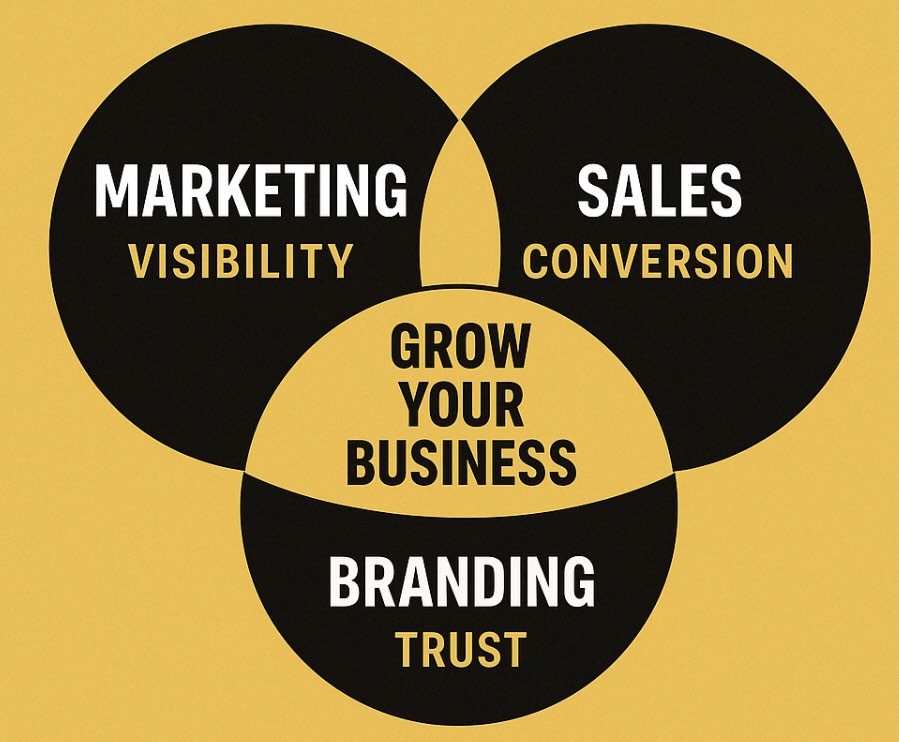
A final word on marketing: The way you run your business day-to-day is itself a marketing strategy. Providing excellent customer service and quality results will naturally lead to positive reviews and word-of-mouth referrals. Simple habits like answering the phone promptly (or returning voicemails quickly), showing up on time for appointments, dressing and behaving professionally on the job, and following up after the service make a huge difference. Many contractors unfortunately have a reputation for being hard to reach or unreliable – you can stand out by just being consistently professional and courteous. These “little things” build trust and credibility, turning clients into ambassadors for your business. As a new entrant, you can’t afford to leave a bad impression with anyone; in local communities, word spreads. So, on top of all the marketing tactics, make sure you deliver on your promises. A truly satisfied customer will often happily tell neighbors or give you that glowing review that wins your next client. In short, be awesome at what you do and how you do it – it’s the kind of marketing money can’t buy.
11. Timeline and ROI: Setting Realistic Expectations
Startup Timeline.
Launching a concrete lifting business involves several steps, and it’s wise to map out a timeline for yourself. For instance, obtaining your equipment might take a month or more (some rig manufacturers have lead times to build out your trailer). Verification of your Google profile could take a couple of weeks, and your website might also take a month or two to be fully ready if you are populating it with content. In parallel, you’ll be learning and possibly doing your first practice jobs (maybe for friends or your own property to test your skills). Many entrepreneurs find that from the initial decision to start the business to actually being open for customers can easily be 2–3 months, even without delays. Build these preparations into your expectations, so you don’t feel discouraged if you’re not lifting slabs for paying clients in week one.
The First Six Months.
In the first half-year of operation, focus on building your brand locally and dialing in your process. It’s realistic to expect a slower trickle of jobs initially as you spread the word. Perhaps you’ll get small residential jobs here and there from your early marketing efforts. Make each one count – document them with photos, get a review, and add them to your portfolio. Financially, you may be reinvesting any early revenue back into marketing (for example, increasing your ad spend as you see what works) or into small equipment upgrades you realize you need. It’s common that in the first few months, your business might just break even or even operate at a slight loss, depending on how heavily you invested upfront. Don’t panic; this is part of the ramp-up. Keep an eye on your cash flow – ensure you have funds for insurance, vehicle fuel/maintenance, and material restock, as those are critical to keep operating. If you planned your startup budget well, you should have a reserve for these early months.
Growing Your Client Base.
By around the 6–12 month mark, if you’ve been consistently marketing, you should see a noticeable uptick in inquiries. Your online presence will also start gaining traction – perhaps your website begins ranking for a few local keywords, generating organic calls. Remember, SEO is slow; significant results might only show toward the end of the first four months to a year, depending on the amount of local competition. Paid ads and referrals will likely be the bigger contributors to leads in the first few months or year. Track metrics such as how many estimates you do per week and your “close rate” (how many turn into paying jobs). This helps predict revenue. It’s not unusual for a new concrete lifting business to perform, say, 1-2 jobs per week in the first few months, then ramp up to 3-5 jobs a week by the end of year one as awareness grows. If each job averages $2,000, you can see how revenue can build. Some jobs will be smaller ($600 sidewalk lifts) and some larger (a $5,000 warehouse floor); learning to estimate and quote accurately will come with experience.
Breakeven and Profitability.
One big question is: when will you recoup your initial investment and start turning a healthy profit? This varies, but let’s use an illustrative example. Suppose your all-in startup costs (rig, training, website, initial marketing) came to $60,000. If your net profit per job (after material, fuel, any labor) is around $500 (this could be higher or lower depending on pricing and costs), you’d need about 120 jobs to cover $60k. If you do 40 jobs in your first year, 60 in your second, you’d break even somewhere in year two. After that, more of the revenue goes into your pocket (or towards scaling the business). Some companies achieve profitability sooner – especially if they manage to get high volumes in their first year or keep costs very low. If you’re able to perform much of the work yourself and keep expenses in check, you might start seeing net profit within the first year. It’s wise, however, to take a conservative view: plan as though you might not pay back your initial investment for about two years, and if it happens sooner, you’ll be pleasantly surprised.
ROI Enhancers.
There are ways to boost your return on investment and shorten the timeline to profitability:
- Keep your overhead low. Work from home, utilize free marketing channels aggressively, and avoid unnecessary expenditures on fancy office setups or expensive trucks beyond what you need to do the job.
- Price your jobs smartly. Don’t undercharge out of insecurity – know the value of your service. Customers are often willing to pay a premium for a reliable solution that saves them huge replacement costs. If you provide excellent service, you can justify rates that ensure a healthy profit margin.
- Upsell related services. As you gain trust with a client, you might notice other issues you can fix. For example, if you lift a driveway, you could also offer to caulk the joints or repair small cracks (some lifting contractors add joint sealing or crack repair as an extra service). These add-ons increase revenue per client with minimal extra marketing cost.
- Leverage seasonal surges. If you know spring and summer are peak, be ready to handle as many jobs as possible in those periods – even if it means long days. The more you can capitalize on the busy season, the better your annual ROI.
Also, monitor your marketing ROI. If you’re spending $1,000 on ads and it’s bringing $10,000 worth of jobs, that’s great (10:1 return). If something isn’t performing (e.g., a particular ad platform or a print advertisement you tried), don’t be afraid to pivot or reallocate that budget to what is working. Over the first year, you’ll gather data to refine your marketing mix for maximum efficiency in year two.
Scaling Up (Year 2 and Beyond). 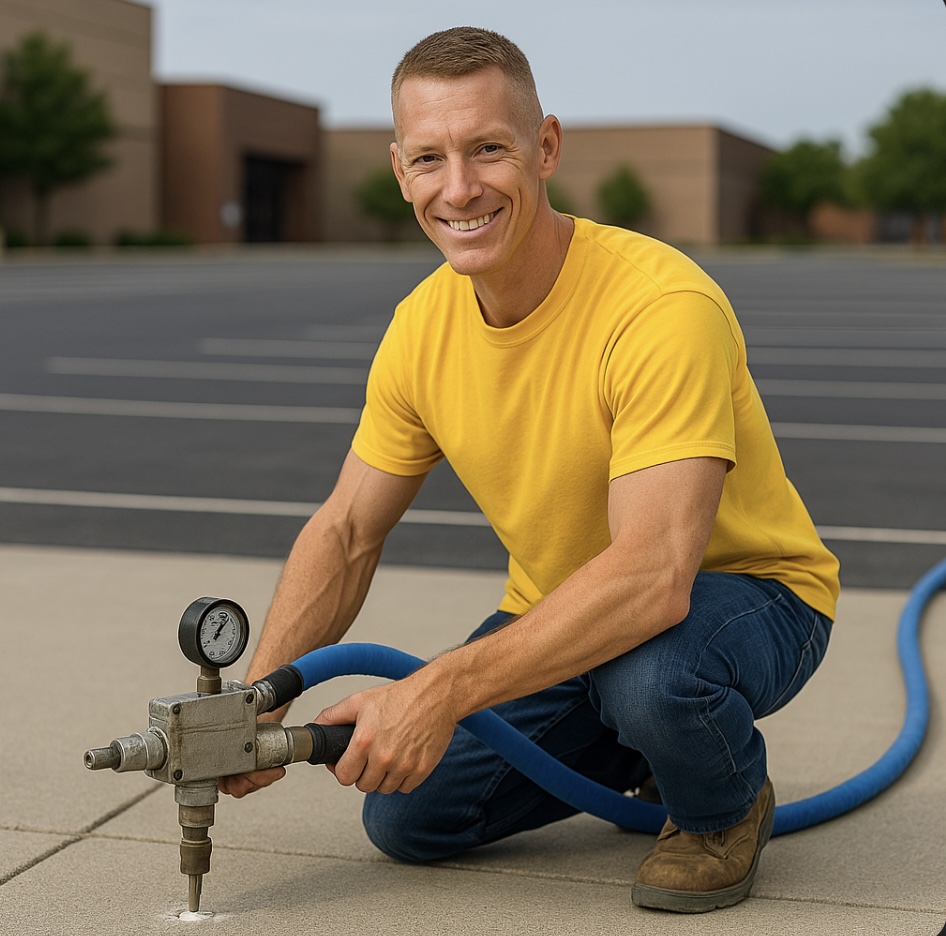
After you’ve made it through the startup phase, you might find yourself booking out weeks in advance, which is a good problem to have. You can then decide to scale: maybe invest in a second rig and crew to double your capacity, or expand to a new territory, or make the jump from residential to commercial work. The timeline for scaling depends on your ambition and local demand. Just remember to scale profits, not just workload. Ensure the business is consistently profitable before multiplying expenses. Some contractors choose to stay small and highly profitable, while others expand into multi-crew operations or even new markets (and some even explore franchising their concept if very successful). There’s no one-size-fits-all path – success could mean a comfortable single-crew business with great income or a larger enterprise. This is all a matter of what you want. There’s no right or wrong answer.
In Summary:
Be patient but persistent. It takes time to build any business, but concrete lifting offers the advantage of relatively high margin jobs and strong demand drivers (aging infrastructure isn’t going away). By the end of your first year, you should see momentum – a growing portfolio, improving marketing reach, and hopefully a decent profit after covering your costs. By the end of year two, many find that the initial investments are paid off or close, and the business can really become a lucrative venture thereafter. Always keep an eye on your numbers (job costs, marketing ROI, monthly profit/loss) so you can make informed decisions. If something’s not working, adjust your strategy; if something is working well, pour fuel on that fire (for example, a certain referral source or ad type). With dedication and smart planning, you can absolutely achieve a strong return on your investment in this business. Many contractors before you have done so, turning a startup concrete leveling business into a six-figure (or more) annual income. It’s achievable with the right mix of technical skill, business savvy, and perseverance.
12. Conclusion
Starting a concrete lifting business is an exciting journey that combines practical problem-solving with entrepreneurial challenge. You’ll be helping people solve frustrating problems – making sidewalks safe, garages usable, and patios level again – which is rewarding work. To recap, success in this industry comes from a blend of technical expertise, solid business foundations, and effective marketing. Take the time to get trained and knowledgeable in concrete leveling techniques, invest in reliable equipment and suppliers, and set up your business legally and professionally. Then, focus on building a strong digital presence (a content-rich website, SEO, and active Google Business profile) because that’s how most customers will find you. Supplement your online strategy with targeted ads and good old-fashioned networking and community outreach. Over time, these efforts compound: your website climbs the search rankings, your reviews and word-of-mouth reputation grow, and your phone rings more often with inquiries.
 Remember that thought leadership and education can set you apart as well. Don’t just sell a service – be a trusted advisor about concrete repair options. When homeowners see that you understand terms like mudjacking vs. polyjacking, or you can explain how polyurethane foam works (perhaps referencing how it’s “fast, strong, and doesn’t shrink” compared to old methods, they’ll be more likely to choose your company. This guide has touched on many aspects from LLC formation to SEO to ROI considerations, but keep learning and adapting. The concrete lifting industry, like any field, evolves with new materials (e.g., eco-friendly foams), new competitors, and new customer expectations. Stay informed by following industry blogs and communities – for instance, LevelRight Marketing’s blog and free tips are tailored to concrete lifters and can help you keep your marketing sharp as you grow. As you gain experience, you might even contribute back to those communities, sharing your own insights.
In closing, with bravery, commitment, and persistence, you can build a thriving concrete raising business. There’s nothing quite like being your own boss and seeing a project through from a sunken slab to a level finish under your company’s name. If you lay the groundwork properly – legally, educationally, and marketing-wise – you’ll position yourself to dominate your local market and reap the rewards. We wish you the best of luck as you raise sunken slabs and raise your new business to success!
Sources:
- LevelRight Marketing Blog
- Alchemy-Spetec (Alchatek) – So You’re Thinking About Starting a Slab Lifting Company
- HMI Company Blog – The Benefits of Starting a Concrete Raising Business:
- HMI Company Case Study – A Day In The Life of Bill: A Polyurethane Contractor
- BOSS Equipment Listing – Starter Foam/Slab Jacking Trailer Rig Package