
Concrete Lifting Website Content Strategy: What Pages Actually Drive Leads
 By: Josh Fulfer
Estimated Read Time: 6 Minutes
At LevelRight Marketing, we’ve worked with dozens of concrete lifting businesses across the country—from solo operators to multi-crew companies—to build websites that not only look good, but actually bring in qualified leads and help close more jobs. Whether you’re lifting driveways with poly foam or stabilizing commercial warehouse floors, your website needs to reflect what you really do—and answer the questions people are actually asking.
Here’s the website content strategy we use across all new builds to create a strong foundation, rank in your local market, and support your sales process.
Step 1: Build Out the Core Residential Pages
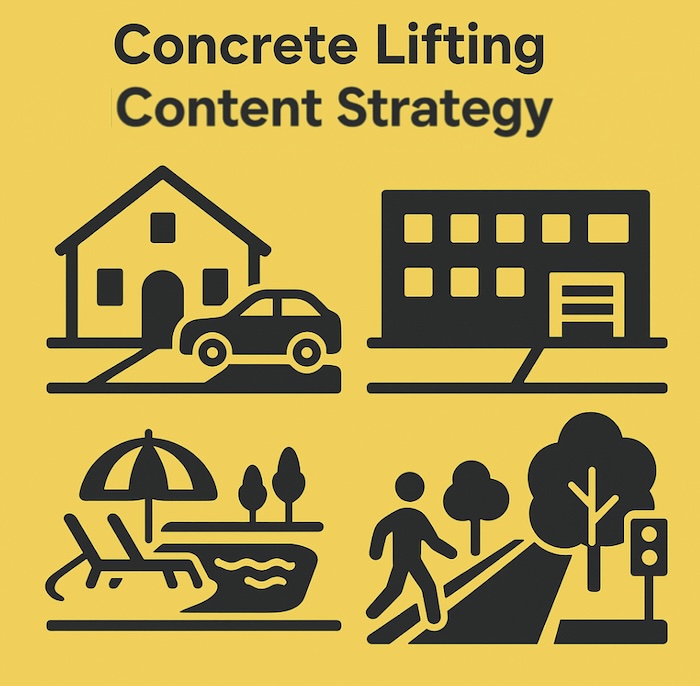
Your residential customers are usually homeowners trying to solve a specific problem. That means we build pages for every major type of slab they might search for. These are high-intent pages that often convert cold traffic into booked estimates.
While your competitors just talk generally how they lift concrete, and maybe have one or two pages about it, you can differentiate yourself and show prospects examples of the exact problems they need fixed. That sells (plus you have lots of great SEO content to be found too.) So take the time to build these out. You’ll reach more people on Google & AI, and sell a higher percentage = WIN WIN!
Standard Residential Pages:
- Driveway Lifting
- Sidewalk / Walkway Leveling
- Garage Floor Repair
- Porch & Step Repair
- Patio Leveling
- Pool Deck Lifting
- Interior Floor Leveling
- Stamped / Decorative Concrete Repair
- Slab Lifting (general page)
- Void Filling
Each page is designed for SEO and conversions—with real photos, FAQs, trust signals, and a clear call to action.
→ Related: The 5 Photos Every Concrete Lifting Website Needs
Step 2: Add the Right Commercial Pages
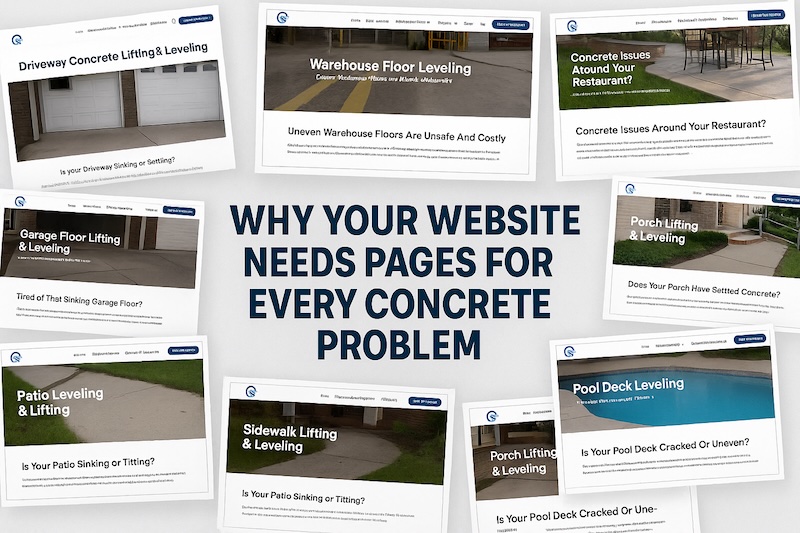 If you’re going after bigger jobs or city contracts, commercial content is key. These pages help you rank for specific opportunities and give decision-makers confidence that you can handle more than a driveway. Unlike your competitors who don’t have these pages, showing prospects examples of their exact problems, in their setting, goes a long ways in getting people to call you.
Commercial & Municipal Examples:
- Warehouse & Factory Floor Leveling
- Parking Lot Trip Hazard Repair
- ADA Compliance Concrete Repairs
- Retail Centers & Strip Malls
- Loading Dock Repair
- Apartment Complex & HOA Concrete Leveling
- Churches, Schools, and Municipal Buildings
- Cold Storage Units (Interior Slabs)
- Dairy Barns, Pole Barns, Grain Bin Pads
- Highway and Bridge Approaches (Deep Injection)
Note: The exact commercial pages you need will vary by your region, target clients, and capabilities. So build a list that makes sense for you.
→ Related: Concrete Lifting Buyer Personas – Not All Customers Have the Same Concerns
3: Build Out Your Local City Pages
Once your main service pages are built, we create optimized pages for your surrounding cities, suburbs, or towns. These are critical for ranking in Google’s organic results beyond your main office location. We like to think of each page as a digital billboard in that town that works for you 24/7/365 – without the high cost of billboards!
Each page includes:
- Targeted local keywords
- Photos from nearby jobs
- Review snippets and service blurbs
- Internal links and calls-to-action
- 1500+ words of locally optimized content
Over time, these city pages become your #1 driver of free traffic and leads.
→ Related: How to Get Concrete Lifting Leads Without Ads
Step 4: Add Case Studies and Job Recaps
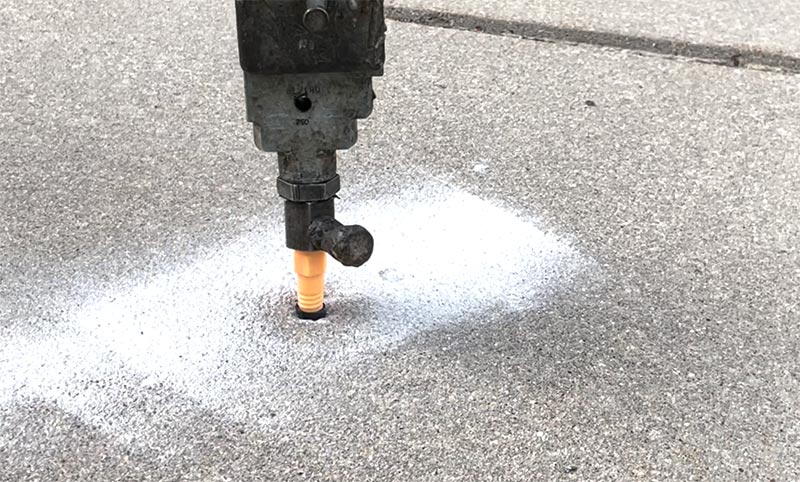 People don’t just want to know what you do—they want to see it. We add job recaps, photo galleries, and case studies that prove you’ve done this before and can be trusted with their property.
- Simple Job Recaps — Few before/after photos, city, short description
- In-Depth Case Studies — For larger commercial or complex jobs
- Portfolio Page — Grouped before/after photo sets
Google, AI, and prospects love fresh content. So continue adding regular posts and articles like this helps you stand out and sell more jobs – all while building valuable long term assets.
Step 5: Blog Articles That Educate & Sell
We turn common customer questions into blog-style content that ranks well and builds trust.
These articles can also be shared with leads who are still on the fence. By having a variety of Q&A type articles, you not only have great SEO content that helps people find you – but when you have a prospect with a particular concern or objection, you can share these articles with them to help close the deal- and position you as the expert rather than just a guy who lifts concrete. That’s real value and builds trust.
Examples include:
- “Is Polyurethane Foam Safe for the Environment?”
- “Should I Fix My Concrete If I’m Selling My Home?”
- “Will the Concrete Keep Sinking After It’s Lifted?”
- “How the ADA Affects Sidewalk Repairs”
- “What Not to Do: The Dangers of DIY Concrete Lifting”
→ Related: Turn Objections into Assets
Step 6: Use That Content Everywhere
Once core your content is built, it doesn’t just sit on your website. Repurpose everything for:
- Google Business posts
- Facebook and social content
- Email follow-ups with leads
- Training your sales team
- Internal links and SEO building
And then keep building. More city pages. More articles. More blogs. More assets.
→ Related: How to Use Job Photos & Videos to Grow Your Business
Final Thoughts: Structure First, Then Scale
A concrete lifting website isn’t just about looking good—it’s about working. You need content and assets that drives leads, ranks in local search, overcomes objections, and builds long-term credibility.
Start with a strong structure. Then add new pages, articles, photos, and local content every month to keep growing.
If you want a site that’s built to grow with your business, we’re here to help.