How to Make a Great First Impression (and Close the Job on the Spot)
 By: Josh Fulfer
Estimated Read Time: 6 Minutes
First impressions matter more than we think—especially in a hands-on business like concrete lifting. Before you ever quote a price or explain the process, your potential customer is already deciding if they trust you, if they like you, and if they believe you’re the right person for the job.
So, how do you win them over from the moment you pull up? And how do you turn a free estimate into a booked job on the spot? Let’s break it down.
Step 1: Show Up Like a Pro
You’re being watched—literally. Between Ring cameras, window peeks, and nosy neighbors, assume you’re on display from the second your truck hits the street. That’s not paranoia—it’s opportunity.
- Don’t park in the customer’s driveway unless they say so.
- Don’t walk across their grass. Walk with care and intention.
- Wear a clean collared shirt or company-branded gear.
Remember: Perception is reality. So what they see, is what they feel. Right away, these small details set the tone: you’re respectful, prepared, and professional.
Step 2: Start With a Conversation
Once the homeowner greets you, thank them for having you out. Then move into what we call the “quick interview phase.” This is your chance to uncover why they really called.
Have them show you or point you to the area that needs repair. But also try to learn more about the real reason they called.
Most people live with sunken or cracked concrete for 5+ years before doing anything about it. So why are they calling now?
- Did someone recently trip and get hurt?
- Did water start pooling toward the house?
- Did the problem just get worse—or more embarrassing to look at?
Ask questions. Listen. Find the pain point. If you know the real why, you can tie your solution directly to the emotion behind it—and that’s what sells jobs.
Step 3: Set the Expectation, Then Go to Work
Once you’ve chatted briefly, explain what you’re going to do:
“I’m going to walk the area, take some measurements, sketch out a repair plan, and then I’ll circle back with options for you.”
Now get to it—but do it with intention. You might know what the problem is in 3 minutes. But take your time. Let them see you stringlining the concrete. Let them hear you tap for voids under the concrete. Let them watch you sketch the layout. These things communicate care and credibility.
The best compliment you can get at this stage is: “You were so much more thorough than anyone else.”
Step 4: Speak Their Language, Not Yours
Now it’s time to present your findings and walk them through the next step. But remember—they don’t care about the specs of the foam or the PSI rating of your pump, blah blah boring, eyes glaze over.
They care about their home. Their kids. Their curb appeal.
So keep it simple. Show them how your solution fixes their problem. Help them understand why caulking matters, why the downspouts matter, and how erosion caused this in the first place. And most importantly—tie it all back to what they told you earlier.
“This will lift the sidewalk flush again, so your kids won’t trip anymore.”
“Fixing this will redirect water away from your foundation.”
That’s what they’re buying: peace of mind and protection—not polyurethane foam.
Step 5: Anchor the Value
If it fits the job, mention the replacement cost of new concrete. That way, your price is now seen in comparison to something much more expensive and disruptive. (And you’re now positioned as the better, less expensive, easier option.)
“A new driveway would cost $9,000 to $12,000 right now. This repair gives you a fix for a fraction of that—without the mess or downtime.”
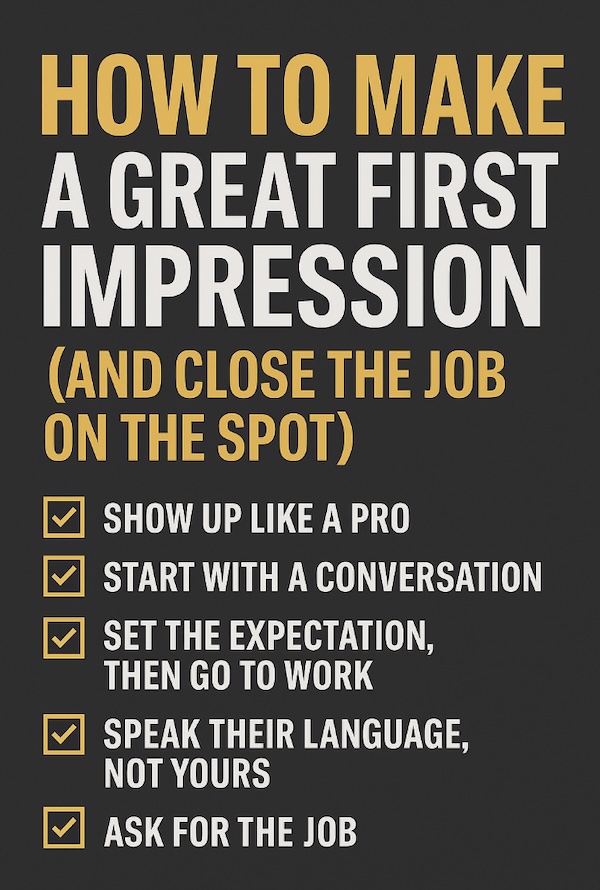 Step 6: Ask for the Job
If you’ve addressed their needs, answered their concerns, and built trust—don’t be afraid to ask for the job. Tie it back to what they told you in the beginning:
“If this takes care of the tripping hazard like we talked about, and it gives you that clean look again—should we go ahead and get this scheduled for you?”
This seemingly obvious step of asking for the job can increase your close rates by up to 40%!
Bonus: Take Notes for Better Follow-Ups
If they don’t commit right away, don’t let that visit go to waste. Take notes on what they said, what you quoted, and what their real problem was. Use a simple CRM, a Google Doc, or even your estimate software.
That way, when you or your staff follow up in a few days, you can say:
“Hey John, just following up on the sidewalk issue we talked about—where your wife tripped last week. Let me know if you’re ready to get it scheduled.”
This personal touch positions you as the pro. And it wins jobs—even days or weeks after the estimate.
Final Thought: Don’t Just Show Up—Stand Out
People don’t always hire the cheapest. They hire the person they trust. And trust starts the moment you show up.
If you do these things well, people will feel the difference. They’ll say, “You were way more professional than the other guy.” And then they’ll say the words we all want to hear: “Let’s do it.”
More resources you might like: