How to Create Website Pages That Rank and Convert

If you want your website to produce better leads, stop writing pages like a brochure.
Start writing pages the way homeowners think: problem first.
Most contractors (and most marketing companies) build pages from the service name:
“Driveway leveling.” “Concrete lifting.” “Polyjacking.”
But homeowners don’t start with your service.
They start with their fear, frustration, and inconvenience:
“Someone’s going to trip.” “Water is pooling.” “This is getting worse.”
This page breaks down our system for creating content that ranks on Google (and AI) and converts visitors into calls.
We’ll use one of the most common settings in this industry—driveways—to show you exactly how it works.
This page is built for two audiences:
- Concrete lifters who want a better way to sell jobs (online and on-site)
- Marketing teams who want a repeatable system for writing pages that convert homeowners


Our Website & Content System (The “Psychology-First” Framework)
This is the system we use to create pages that rank and convert—whether the topic is driveways, pool decks, sidewalks, front steps, patios, or garage slabs.
- Lead with the real homeowner concern (safety, liability, water, embarrassment, urgency) — not the service name.
- Use problem photos to trigger recognition so the homeowner feels understood immediately.
- Explain the root cause in plain language (voids, washout, soil movement) so it feels like a real diagnosis.
- Address the objections that stop action (replacement cost, mess, trust, “not urgent,” “will it last?”).
- Support with proof + supporting content (before/after photos, reviews, FAQs, and related pages) to remove doubt.
The driveway example below shows exactly how this plays out in the real world.
Why Driveways Are the Perfect Example
Driveways are one of the most common settings in concrete lifting. They’re also one of the easiest to sell when the page is written correctly.
Because driveways hit multiple high-emotion triggers:
- Safety (trip hazards at seams and transitions)
- Liability (guests, kids, deliveries)
- Water behavior (pooling, drainage problems, water running toward the garage)
- Cost avoidance (replacement feels extreme)
Step 2: Lead With Safety (Trip Hazards First)
Here’s the big mistake: selling “driveway leveling” instead of selling safety.
Homeowners don’t wake up and search:
- “void under my driveway”
- “soil compaction failure”
- “subgrade erosion”
They search (or think):
- “This is a trip hazard.”
- “My kid is going to eat it right here.”
- “If someone falls, that’s on me.”
- “The shovel keeps catching.”
Trip hazards are more prevalent than cracks, more emotional than curb appeal, and more urgent than “someday we’ll replace it.”
One clean line that closes deals:
“This spot is a trip hazard. That’s the real issue.”
Step 3: Explain the Root Cause (So It Feels Like a Diagnosis)
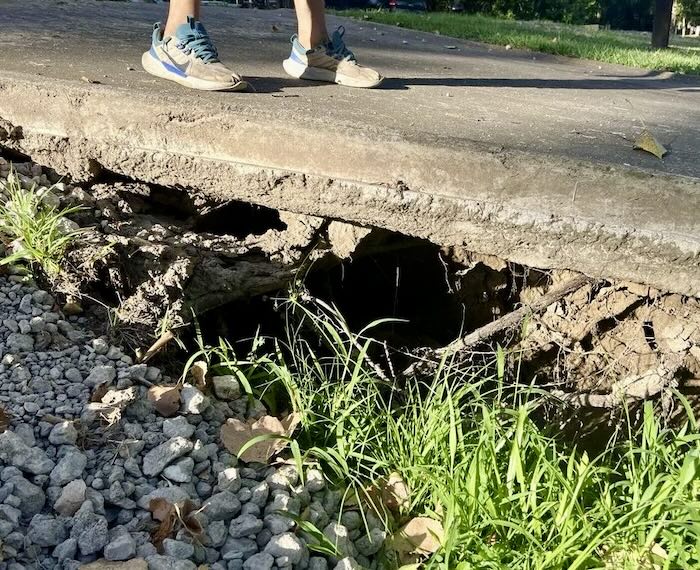 Once you’ve established the real problem (the hazard), you explain why it’s happening—without overcomplicating it.
Driveways often settle because the base underneath is no longer stable. That can come from washout, erosion,
downspout runoff, poor compaction, or soil movement over time.
This is the difference between a page that “sounds like marketing” and a page that sounds like a professional who sees these issues every day.
The “3-Layer Driveway Sale” (How to Close Without Competing on Price)
Here’s the framework we use to sell driveway jobs the right way. It keeps you out of the price war and positions
your work as a true fix—not a quick patch.
Layer 1: Safety (Trip hazards)
This is the hook. It’s what gets action.
- Raised edges at a seam
- A dip right before the garage
- A cracked panel that created a lip
- A corner that’s dropped enough to catch a toe
Layer 2: Function (How the driveway behaves)
Now you explain what the homeowner is already noticing:
- Water pooling in low spots
- Water running toward the garage
- Cars scraping a low panel
- Wobbling slabs (voids underneath)
Layer 3: Protection (Stability under the slab)
This is where you separate yourself from “just lift it” contractors.
You show what’s happening under the slab and position stabilization/void filling as the long-term fix.
Step 4: Address the Objections That Stop People From Calling
Most homeowners delay fixing their concrete because they believe one of these things:
- Replacement is the only option (and they don’t want that bill).
- They don’t want a messy project that disrupts the home.
- They think it’s “cosmetic” until someone almost falls.
- They don’t trust contractors and don’t want to waste time.
- They don’t know lifting can be fast, clean, and realistic.
This is why pages that lead with “polyurethane injection” often fail. They skip the part the homeowner cares about.
Step 5: Use Supporting Content to Prove You Understand the Problem
Homeowners don’t just want a fix. They want confidence. Supporting content is how you give it to them.
Two examples that work extremely well on driveway pages:
- Pooling water (because it signals “this could become a bigger issue”).
- Long delay behavior (because it normalizes the problem and explains urgency without hype).
 Pooling Water: The “Adult Decision” Trigger
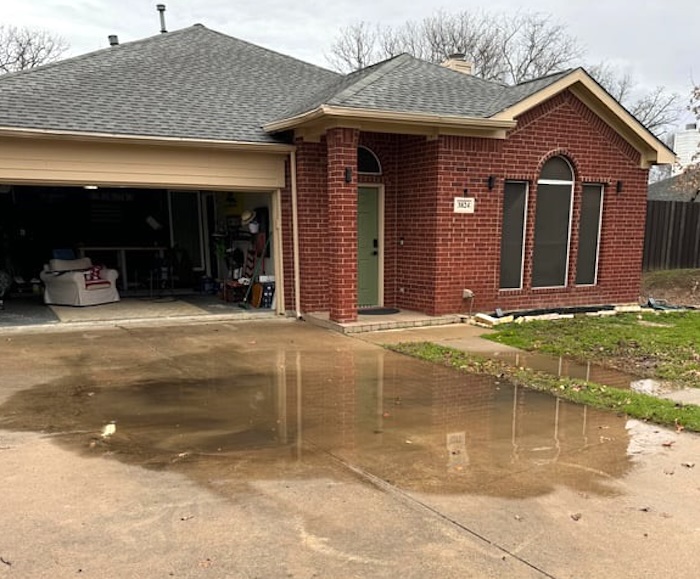
Trip hazards get attention fast. But pooling water is what turns a “maybe later” homeowner into a “let’s fix this now” homeowner.
Here’s the right way to explain it:
- Pooling water often means the slab has sunk and changed the slope.
- Water can freeze, expand, and make cracks worse over time.
- If water is running toward the garage, it can create bigger problems than “just concrete.”
Important: Don’t promise “we fix drainage” as a blanket statement.
Say this instead:
“Lifting can often improve slope and reduce pooling, but it depends on the layout. We’ll look at how water is moving and tell you what’s realistic.”
Why Homeowners Wait Years (Often 5+) to Fix Their Concrete
This is the hidden psychology behind driveway leads—and it explains why your marketing must lead with the real concern (trip hazards), not the technical process.
Most homeowners live with uneven concrete for years because the pain is “quiet” until something forces the decision.
What changes everything?
- A near-miss trip
- A parent visiting
- Kids running in and out of the garage
- Winter shoveling and catching edges
- Water pooling or running toward the garage
That’s when the homeowner goes from “we should fix this someday” to “we should handle this now.”
What to Say at the Estimate (Simple Script)
A good page should match the same flow you use in-person. Here’s the script we teach:
- Point to the hazard: “This edge right here is the trip hazard.”
- Make it real: “This is where people catch their foot—especially coming in and out of the garage.”
- Explain the ‘why’ in plain English: “A lot of the time, this happens because the dirt under the concrete washed out. That leaves empty space.”
- Show the consequence: “When there’s empty space, the slab moves, cracks, and keeps settling.”
- Sell the right fix: “Our goal is to lift it, but also stabilize it so it doesn’t turn into the same problem again.”
Key mindset: Don’t “bid a panel.” Quote the safe walking path and the root cause.
Bonus: The Photo Sequence That Sells (Use This as a Standard SOP)
If you want better leads, document driveway jobs like a story.
- Trip hazard close-up (the lip/edge that catches feet)
- Wide shot showing where it is (garage approach, walkway line, main path)
- Void evidence (washed out base, empty space, erosion line)
- Water behavior (pooling, wrong slope, runoff toward garage)
- After photo showing a safe, smooth transition
This sequence makes your website copy easier, your estimates easier, and your pricing easier to defend.
Page Like This for Your Business?
If you’re a concrete lifting contractor, this is the kind of content system that:
- Ranks for real homeowner searches (not just “concrete lifting near me”)
- Pre-sells safety and value before you ever answer the phone
- Attracts better leads and filters out more price shoppers
- Creates training assets your team can use over and over
We build pages and full website systems like this for concrete lifting companies.
Quick Checklist (Train Your Team With This)
- Start with the homeowner’s real concern (trip hazards and safety).
- Use problem photos early to create instant recognition.
- Explain the root cause in plain language (voids/washout/soil movement).
- Address objections (replacement cost, mess, trust, urgency, longevity).
- Add supporting content (pooling water + “why people wait 5+ years”).
- End with proof and a clear next step.