 How to Win Warehouse and Corporate Concrete Lifting Jobs (and Why Knowing Your Customer Is Everything)
By: Josh Fulfer
Estimated Read Time: 4 Minutes
The Type of Lead That Can Change Your Business
We recently got a lead through Google from a warehouse facility in Texas- Uline, a huge company and huge owner of concrete. The property manager said they had several sidewalks that needed lifting. On paper, it might look like a decent job — but behind that message was a massive opportunity.
When you get an inquiry from a company like this, it’s not just another slab to lift. You’re talking to a large organization that likely owns dozens of properties. And if you earn their trust, one small sidewalk repair can turn into recurring work across multiple sites for years.
This is where most lifters miss it. They treat it like a quick quote instead of the start of a relationship. But if you want to win big commercial jobs — the kind that can change your business — you’ve got to slow down, show up, and prove you’re the kind of company they can count on.
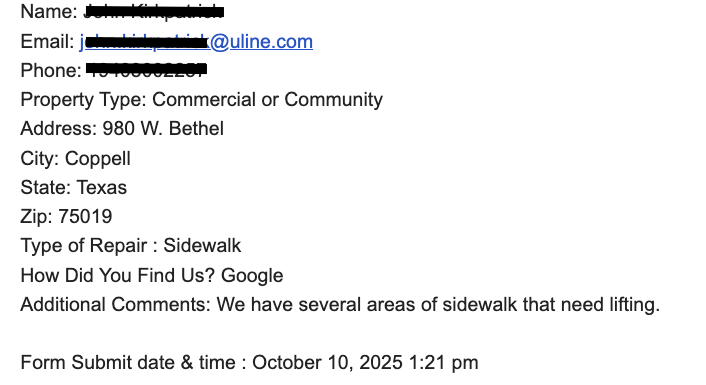
Fee lead that came via Google!
Know Who You’re Talking To
You’re not dealing with a homeowner who just wants a smooth driveway. You’re talking to an operations manager, property supervisor, or maintenance director — someone responsible for keeping a large facility safe and functional.
Their priorities are different:
- Keep things running smoothly
- Avoid downtime and safety issues
- Hire vendors that make them look good
They’re not worried about how the foam works. They want to know:
- Can you do it without interrupting our operations?
- Will it hold up?
- Can I trust you to handle this professionally?
When you understand that, you stop trying to “sell” them and start helping them solve real business problems.
Do Your Homework Before You Quote
Before you pick up the phone or send a bid — Google the company. See how big they are. Look at their facility on Maps. Learn what they do.
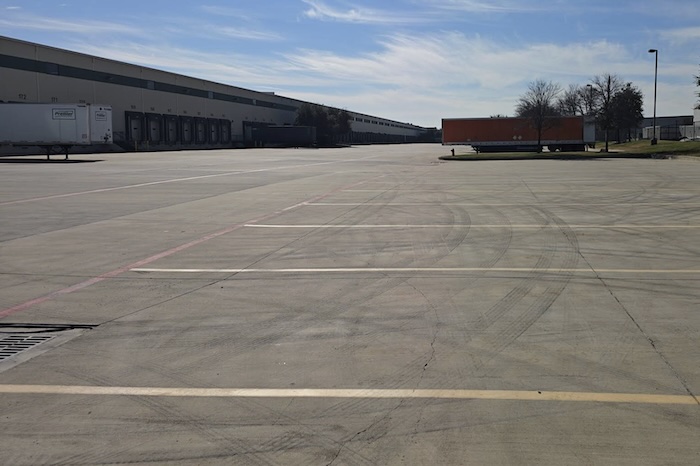
If it’s a warehouse, know where the loading docks are, how trucks move through, and which areas see the most wear. That context changes everything about how you approach the job.
When you show up, talk their language:
“I can work around your shipping schedule.”
“We’ll section off small zones to keep traffic flowing.”
“We’ll handle the safety cones and cleanup.”
Those words build instant credibility because it shows you get their world.
For more on how warehouse projects differ from smaller residential work, read How to Take Better Job Photos for Concrete Lifting — it explains how capturing the right visuals helps land larger, more complex jobs.
 Always Meet in Person — Even If They Say You Don’t Have To
Sometimes they’ll say, “Just walk the site, we’ll send a map.” Don’t fall for that. Always meet in person.
These jobs are built on trust — and trust starts face-to-face. Shake hands. Make eye contact. Listen. Ask smart questions about access, safety, and timing.
Every move you make is part of the impression you’re building. From the second you pull into the lot, assume you’re being watched. If you step out of the truck looking disorganized or rushed, that’s how they’ll see your work, too.
Don’t quickly glance at a problem area and say “we’ll take care of it.” Measure it. Mark it. Take photos. Explain your process clearly. Perspective is reality. They’re judging your professionalism long before you touch the slab.
Speak Their Language: Risk and Cost Avoidance
Large companies care about avoiding bigger costs — plain and simple.
They want to protect their property, their people, and their budget. So anchor your message around those things:
- “Replacing that sidewalk would cost five times more.”
- “By lifting now, you’ll prevent trip hazards and avoid injury claims.”
- “We can do this with no shutdown, so your team stays productive.”
That’s the conversation that wins the job — because you’re showing them you understand what really matters to their business.
Look the Part. Act the Part.
When you walk onto a site like Uline or a logistics center, you’re not just representing your company — you’re representing them.
So look like a professional they’d be proud to hire:
- Clean truck and branded shirt
- Clipboard, tablet, or organized paperwork
- Proof of insurance ready to go
- Photos, warranty info, and a clear written estimate
- Webpage dedicated to commercial settings that address their concerns
If they Google you afterward, your website and reviews should match the story you told in person. Your online presence should reinforce the trust you built in that meeting.
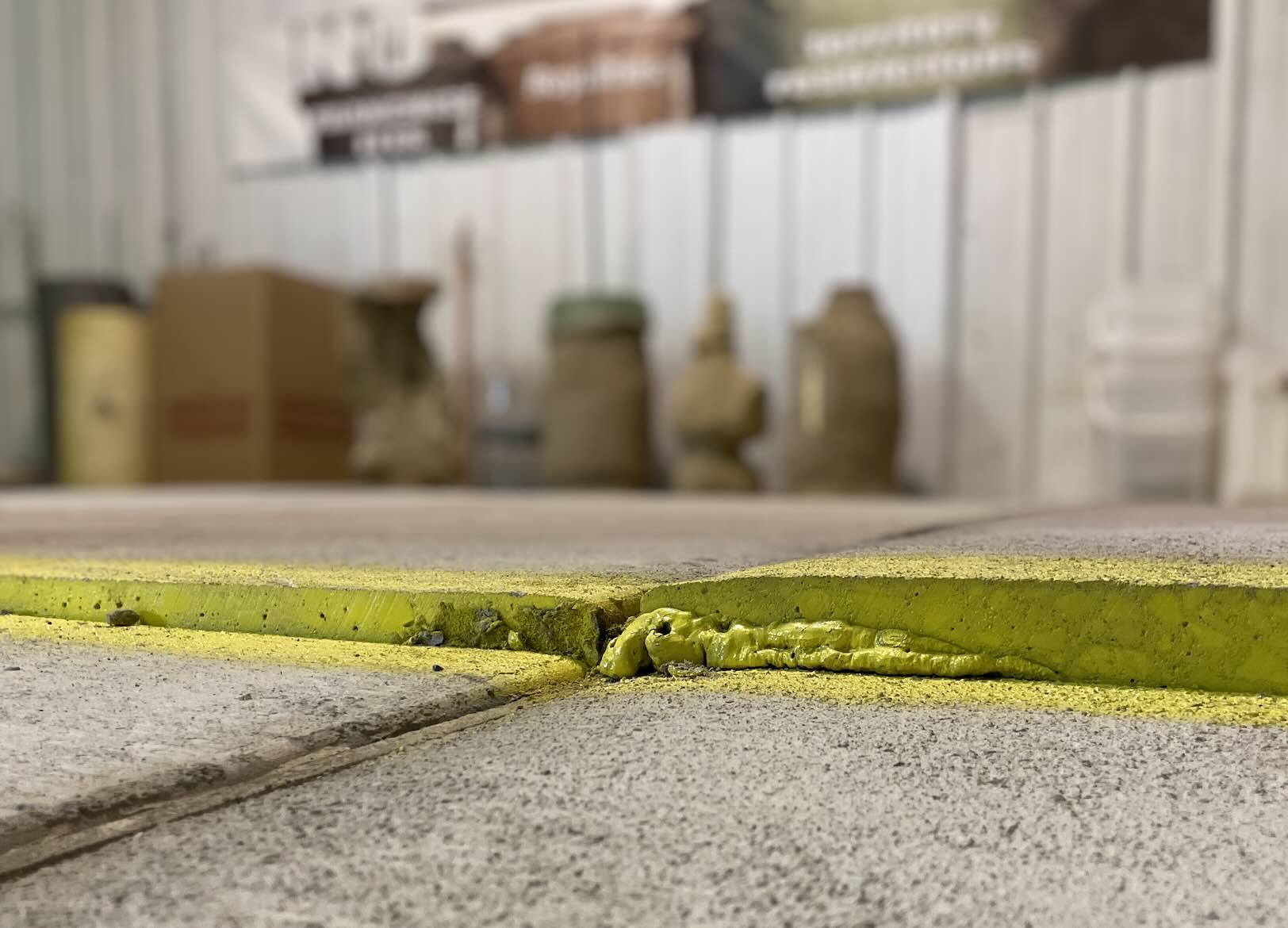 Photos Build Credibility (and Future Sales)
Every photo you take on a commercial job is more than documentation — it’s proof of professionalism.
Take clean before-and-after photos showing the problem and your solution. These images help build credibility with your current client and future ones. They’re also powerful marketing tools you can use on your website, Google Business profile, and social media.
After the job, share the photos with your contact and thank them for the opportunity. This opens the door to earning a great review — and reviews from recognizable companies carry major weight in your marketing.
👉 Click for tips about how to take better photos to get more calls.
Follow Up Like It Matters — Because It Does
Every message you send, every call you return (or don’t) is building or breaking trust.
Don’t wait days to reply. Don’t miss the chance to follow up after sending a proposal. Send a quick email, check in, remind them you’re ready when they are.
“Going out of your way” is the difference between being forgotten and being remembered.”
And when you get the job — do everything you said you would. On time. Clean work. Zero excuses. That’s how you get the next one.
Think Bigger Than One Job
That $3,000 sidewalk lift might seem small. But if you do it right — communicate clearly, show up professionally, and deliver flawless results — it could lead to warehouse floors, loading docks, and maintenance work at their other sites.
Commercial clients value consistency. If you make their life easier, they’ll give you every location they manage.
“Big jobs don’t come from luck. They come from consistency.”
Knowing Your Customer Is Power
When you take time to understand the company you’re working with — their schedule, their operations, their risks — you change the game.
You stop competing on price and start standing out for professionalism. You stop chasing one-off jobs and start building partnerships. And you become the company they trust — the one they call first when something sinks again.
For more on how understanding your client mindset changes everything, see Customers Buy What They Feel (Not Just Your Price).
The Bottom Line
If you want to grow your business, stop just fixing slabs. Start studying your customers — and show up ready to speak their language.
Every visit, every handshake, every photo you take is part of your brand. Be the contractor who goes above and beyond. Be the one they remember.
Because when a company like Uline or a warehouse facility calls — it’s not just another lead. It’s an opportunity to build a reputation that could feed your business for years.

Josh Fulfer is the founder of LevelRight Marketing, a firm focused exclusively on helping concrete lifting companies generate more visibility & calls.
For over a decade, he has built lead-driven websites, studied how homeowners search, and worked directly with lifting contractors across the country. His approach is rooted in real customer behavior and real-world results.
If you run a concrete lifting company and want your website to work as a true sales tool, you’re exactly who LevelRight Marketing was built for.
📞 Call: (262) 600-2989