Concrete Lifting for Assisted Living Facilities
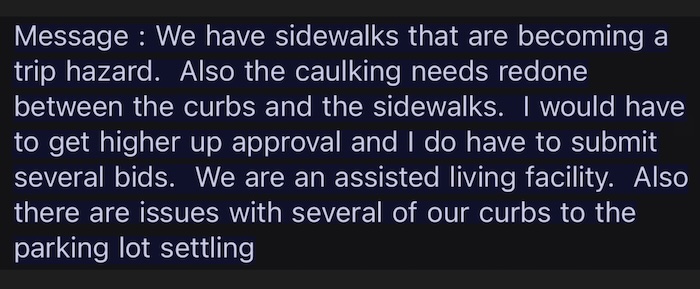
– Real Lead We Received March ’26
We just got an inbound lead from an assisted living facility. Trip hazard sidewalks. Settling curbs in the parking lot. Caulking that needs redone. Multiple areas across the property.
This is the kind of job most concrete lifting contractors dream about. Large scope, real urgency, commercial budget — and a buyer who is genuinely motivated to fix the problem. But here’s the thing: this lead didn’t come from a referral or a cold call. It came from Google. Because we had a dedicated page built specifically for assisted living and senior care facilities.
That page speaks their language. It answers their questions. It shows real photos of the exact problems they’re dealing with. And when they searched — whether on Google or through an AI tool — we showed up as the obvious choice.
That’s what this article is about. Understanding who this buyer actually is, how to get found by them, and how to sell and close a job that’s different from your typical residential driveway call.
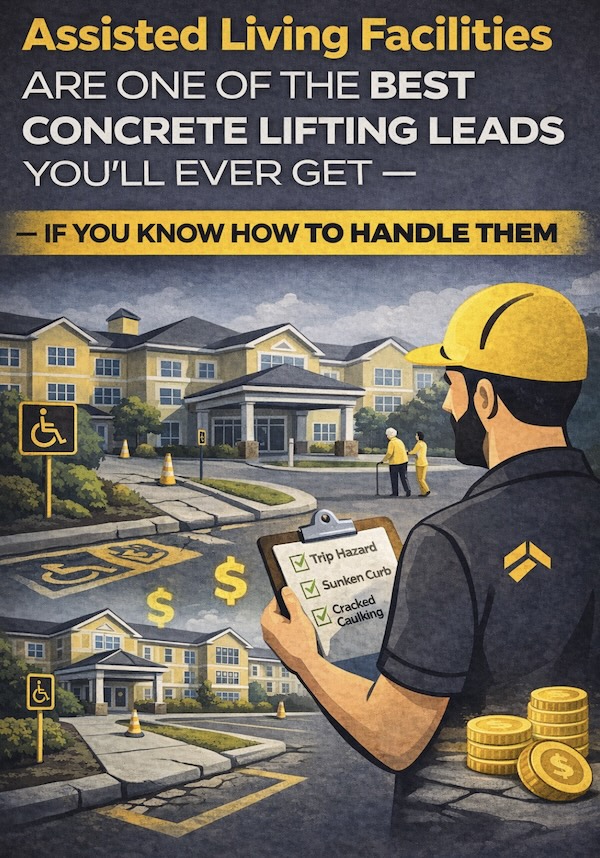
Who You’re Actually Talking To at an Assisted Living Facility
This is not a homeowner making a quick decision. The buyer persona here is layered — and if you don’t understand that going in, you’ll lose the job or kill the relationship before it starts.
The person who fills out your contact form is usually a facilities manager or maintenance director. They’re the ones who noticed the problem. They’re the ones who did the search. But they are almost never the final decision maker.
Above them is a property manager, regional director, or ownership group who has to approve the spend. Depending on the size of the facility, that approval process can involve multiple bids, an internal review, and a budget cycle that you have absolutely no control over.
So the first thing to understand: this is a slow-burn sale. You’re not getting a call Monday and doing the job Thursday. You’re planting a flag, being professional, following up consistently, and being the most credible option when the approval comes through. The contractors who lose these jobs are the ones who treat it like a residential lead and go cold after a week.
Understanding your buyer personas — and building content that speaks to each one — is a core part of how we think about website strategy for concrete lifting contractors.
What They’re Worried About (And It’s Not the Price)
The number one fear at an assisted living facility is a resident getting hurt.
That’s it. That’s the whole thing. A 78-year-old resident catches their foot on a lifted sidewalk slab and goes down — and now you have a lawsuit, a family in crisis, a regulatory problem, and a PR nightmare. The facilities manager who didn’t get that fixed is having a very bad week.
So when you show up to look at this job, price is not the first conversation. Safety is. Your job is to speak to that fear directly and confidently. Show them you understand the stakes. Show them photos of similar problems you’ve fixed at similar properties. Help them communicate the urgency internally when they go back to get approval.
But there are other concerns too, and they matter:
Deferred maintenance costs. Facilities managers think in systems. A sunken sidewalk section isn’t just a trip hazard — it’s water infiltrating the base, causing more settling, which will eventually become a replacement. Concrete lifting is cheaper than replacement, faster than replacement, and extends the life of the existing slab. That’s a maintenance budget conversation, not just a repair conversation.
Disruption to residents and operations. These facilities run on routine. Residents are walking those paths every day. Any repair needs to happen fast, with minimal disruption, and ideally without tearing up the property. Concrete lifting is done in hours, not days. No demo, no cure time, back in service the same day. That’s a massive selling point here — and you should say it plainly.
Liability and documentation. Some facilities will want documentation of the repair for their records or their insurance carrier. Come prepared for that. A simple write-up of what was done, where, and when goes a long way in building trust with this buyer.
Why a Dedicated Page Gets You Found — and Converts
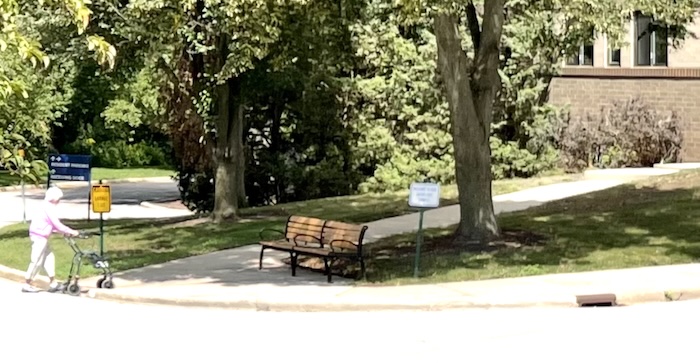
Resident Safety & Lability Reduction is Top Priority
The lead you see in this article is real. It came in through our contact form. And the reason it came to us is simple: we had a page on our site specifically built for assisted living and senior care facilities.
Not a generic “commercial concrete lifting” page. A page that talks about trip hazards near resident walkways. That mentions liability exposure for facility owners. That uses the language a facilities manager would actually search — “sunken sidewalk repair assisted living,” “concrete leveling senior care facility,” “trip hazard fix nursing home.”
Google and AI search tools like ChatGPT are getting very good at matching search intent to specific content. Generic content loses to specific content every time. If your site just talks about concrete lifting in broad terms, you won’t show up when a facilities director is searching for someone who understands their exact situation.
The page works because it does two things at once: it gets you found, and it converts. The language, the photos, the framing — it all signals to the reader that you’ve done this before. That you understand their world. That you’re not going to show up and treat their memory care wing like a residential driveway.
That’s why it’s so important to have pages for every setting of concrete you repair.
How to Sell and Close the Job
Once you’re in front of this buyer, here’s what works:
Lead with safety, always. Open by acknowledging the risk they’re managing. Say it plainly: “I understand you’re dealing with a liability issue here, and that’s the right priority.” It builds trust immediately and signals that you get it.
Bring before and after photos from similar jobs. If you’ve done work at a commercial property, a school, a church — anything that looks institutional — bring those visuals. If you have photos from another assisted living or senior property, even better. This buyer needs to see that you’ve done this before.
Explain the process simply. They may not know anything about polyurethane foam or mudjacking. Don’t get technical. Tell them: “We drill small holes, inject a material underneath that lifts the slab back into place, and seal everything up. It’s done in a few hours and the surface is ready to walk on right away.” That’s it. That’s what they need to hear.
Help them make the case internally. Ask them: “What does your approval process look like? Is there anything I can put together in writing that would help you get this in front of the right people?” Offering a simple one-page scope summary with before photos, the repair plan, and the cost makes their job easier — and keeps you top of mind when they walk into that approval meeting.
Follow up. Then follow up again. These jobs don’t close on the first call. Set a reminder for two weeks out. Send a brief check-in. Ask if there’s anything they need for the approval process. The contractor who stays in front of them professionally wins the job almost every time.
Position concrete lifting against replacement — and anchoring. If replacement has been discussed, this is where you have a real advantage. Concrete lifting is a fraction of the cost, done in hours instead of days, and doesn’t disrupt the property or the residents. Against slab anchoring or stabilization systems, lifting actually corrects the problem — you’re restoring the surface to where it should be, not just stabilizing it in the wrong position. Make that comparison clearly and confidently.
Build the Page. Get the Lead.
The assisted living facility lead in this article didn’t happen by accident. It happened because we built a page that spoke directly to that buyer — their fears, their language, their situation.
That’s the whole model. You don’t wait for someone to search “concrete lifting near me” and hope they find you. You build content that reaches people where they actually are, using the words they actually use, showing them that you understand their specific problem.
Assisted living facilities, HOAs, churches, schools, municipalities — every one of these is a buyer persona with a specific set of concerns. And every one of them is worth a dedicated page on your site.
The contractors who build those pages rank. They get found. And when a facilities director at an assisted living community is staring at a lifted sidewalk slab and thinking about what happens if a resident falls — they call the company that clearly knows what they’re doing.
That can be you.
Want to talk about adding commercial buyer personas to your website strategy?
Let’s get on a call →